- English
- French
- German
- Portuguese
- Spanish
- Russian
- Japanese
- Korean
- Arabic
- Greek
- German
- Turkish
- Italian
- Danish
- Romanian
- Indonesian
- Czech
- Afrikaans
- Swedish
- Polish
- Basque
- Catalan
- Esperanto
- Hindi
- Lao
- Albanian
- Amharic
- Armenian
- Azerbaijani
- Belarusian
- Bengali
- Bosnian
- Bulgarian
- Cebuano
- Chichewa
- Corsican
- Croatian
- Dutch
- Estonian
- Filipino
- Finnish
- Frisian
- Galician
- Georgian
- Gujarati
- Haitian
- Hausa
- Hawaiian
- Hebrew
- Hmong
- Hungarian
- Icelandic
- Igbo
- Javanese
- Kannada
- Kazakh
- Khmer
- Kurdish
- Kyrgyz
- Latin
- Latvian
- Lithuanian
- Luxembou..
- Macedonian
- Malagasy
- Malay
- Malayalam
- Maltese
- Maori
- Marathi
- Mongolian
- Burmese
- Nepali
- Norwegian
- Pashto
- Persian
- Punjabi
- Serbian
- Sesotho
- Sinhala
- Slovak
- Slovenian
- Somali
- Samoan
- Scots Gaelic
- Shona
- Sindhi
- Sundanese
- Swahili
- Tajik
- Tamil
- Telugu
- Thai
- Ukrainian
- Urdu
- Uzbek
- Vietnamese
- Welsh
- Xhosa
- Yiddish
- Yoruba
- Zulu
Titanium Material Standards and Ordering Guide
Titanium Material Standards and Ordering Requirements
A material order needs an exact grade, product form, condition, specification and acceptance requirements. A titanium plate, a machining bar, straight-length wire and welding filler may have similar alloy names but different procurement requirements. A standard name on a product page does not establish conformity of the supplied batch.
Match the Specification to the Product Form
| Product requirement | Specification family to discuss | Ordering information |
|---|---|---|
| Industrial strip, sheet and plate | ASTM B265 | Exact grade, edition, thickness, width, length, material condition and dimensional requirements |
| Titanium bar and billet | ASTM B348/B348M | Exact grade, edition, product form, condition, dimensions and inspection scope |
| Titanium wire | ASTM B863 | Grade, diameter, product condition, delivery form and acceptance requirements |
| Unalloyed titanium for surgical implant manufacture | ASTM F67 | Grade, material form, edition and chemical/mechanical records |
| Wrought Ti-6Al-4V ELI for surgical implant manufacture | ASTM F136 | ELI alloy, product form, condition, edition and material documents |
| Titanium welding filler | AWS A5.16/A5.16M | Purchaser-specified filler classification, base material, delivery form and conformity evidence |
Plate and Sheet Orders
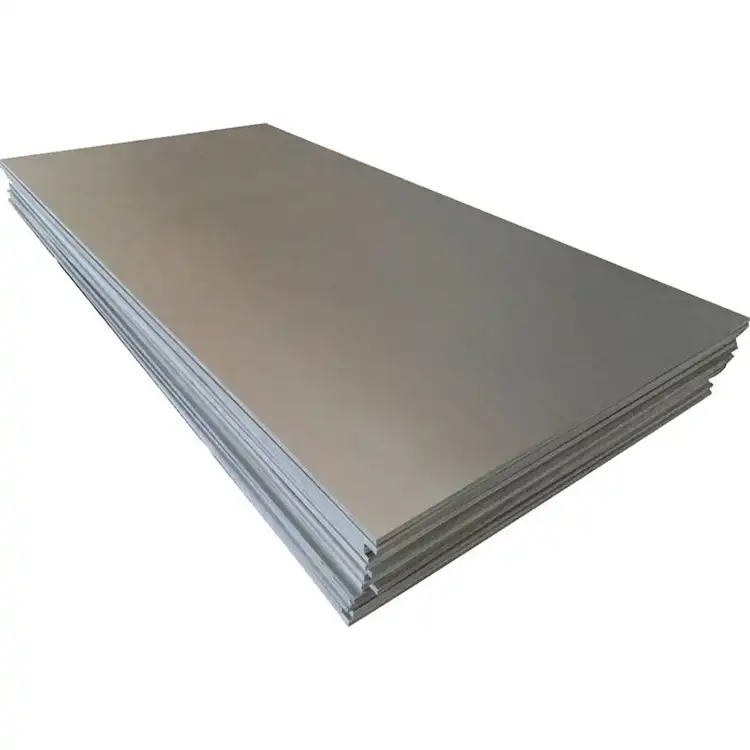
Specify the grade before discussing cut sizes. For commercially pure material, Grade 1 and Grade 2 are separate designations. Provide thickness limits, width and length, flatness, surface criteria and edge condition. Include any cutting or machining allowance in the drawing. Review our commercially pure titanium plate and Grade 1 plate procurement pages.
Small-Diameter Rod and Wire
Identify whether the required supply is a bar product or wire supplied in straight lengths. Nominal diameter alone does not select the specification. State diameter limits, cut length, straightness measurement basis, surface requirements and material condition. Confirm the applicable specification and edition for the actual product form before ordering.
Medical Raw-Material Requirements
F67 concerns unalloyed titanium; F136 concerns wrought Ti-6Al-4V ELI. They describe different material families and should not be treated as interchangeable options for every titanium grade. These specifications concern material for downstream manufacturing, not a finished sterile implant or vehicle-independent device approval.
Agree on heat/lot identification, the required material test records and purchaser acceptance criteria. Review medical titanium plate materials and surgical grade titanium bar materials for product-form requirements.
Welding Filler and Base Material
A machining bar is not automatically classified filler material. Specify the required welding filler classification and base material separately. Confirm composition, product identification, dimensions, packaging and batch evidence against the purchase requirements. See titanium welding rod procurement.
Documents to Agree Before Purchase
- Exact specification, edition, grade and product form.
- Drawing dimensions, tolerances, condition and surface acceptance.
- Required chemistry and mechanical records for the supplied batch.
- Heat/lot identification and correspondence with the documents.
- Additional inspection and purchaser-specific acceptance criteria.
This guide summarizes material-ordering distinctions. Complete requirements come from the agreed standard edition and purchase specification. It does not reproduce the full standards or certify an available batch. Contact HYTi with your material specification and drawing or email jolina@bjhyti.com.
_1781687568260.jpg)


_1781322621523.jpg)
Learn about our latest products and discounts through SMS or email