- English
- French
- German
- Portuguese
- Spanish
- Russian
- Japanese
- Korean
- Arabic
- Greek
- German
- Turkish
- Italian
- Danish
- Romanian
- Indonesian
- Czech
- Afrikaans
- Swedish
- Polish
- Basque
- Catalan
- Esperanto
- Hindi
- Lao
- Albanian
- Amharic
- Armenian
- Azerbaijani
- Belarusian
- Bengali
- Bosnian
- Bulgarian
- Cebuano
- Chichewa
- Corsican
- Croatian
- Dutch
- Estonian
- Filipino
- Finnish
- Frisian
- Galician
- Georgian
- Gujarati
- Haitian
- Hausa
- Hawaiian
- Hebrew
- Hmong
- Hungarian
- Icelandic
- Igbo
- Javanese
- Kannada
- Kazakh
- Khmer
- Kurdish
- Kyrgyz
- Latin
- Latvian
- Lithuanian
- Luxembou..
- Macedonian
- Malagasy
- Malay
- Malayalam
- Maltese
- Maori
- Marathi
- Mongolian
- Burmese
- Nepali
- Norwegian
- Pashto
- Persian
- Punjabi
- Serbian
- Sesotho
- Sinhala
- Slovak
- Slovenian
- Somali
- Samoan
- Scots Gaelic
- Shona
- Sindhi
- Sundanese
- Swahili
- Tajik
- Tamil
- Telugu
- Thai
- Ukrainian
- Urdu
- Uzbek
- Vietnamese
- Welsh
- Xhosa
- Yiddish
- Yoruba
- Zulu
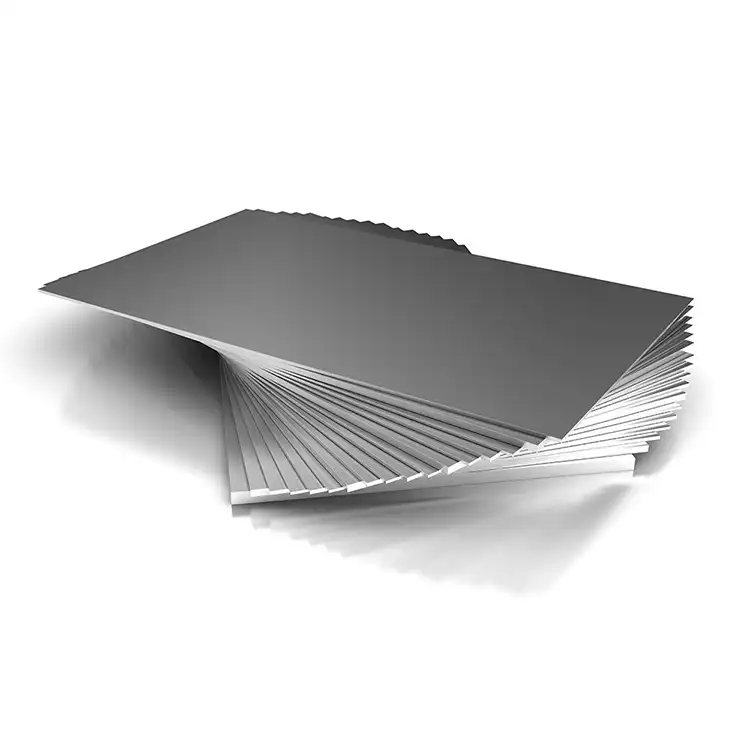
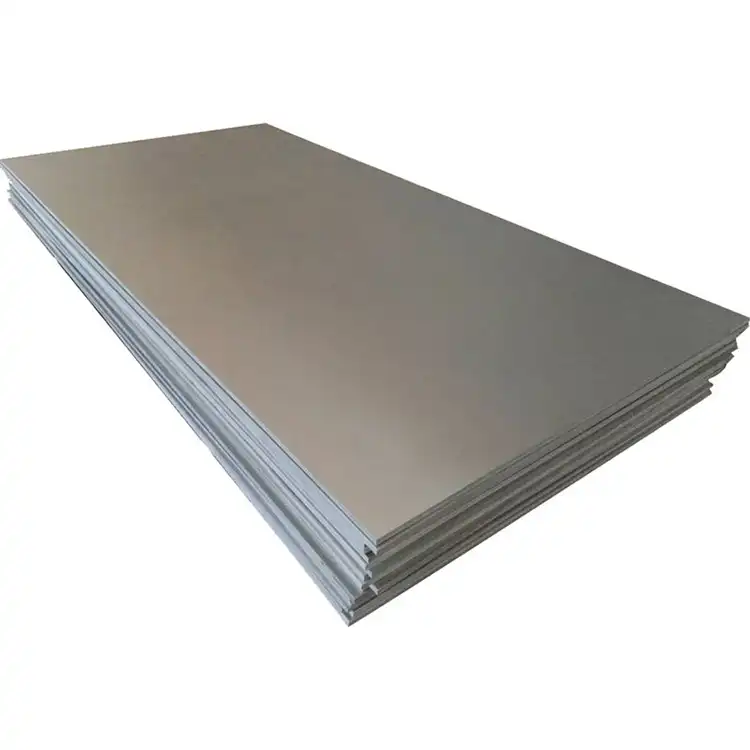
Chlor-alkali industry titanium anode plate
Coating: Ru-Ir mixed metal oxide
Current Density: 2000–8000 A/m²
Temperature Range: 70°C to 95°C
Plate Thickness: 1.0–3.0 mm
Coating Loading: 10–25 g/m²
Design Life: ≥8 years
Application: Chlor-alkali membrane cell electrolysis systems
What Is Chlor-alkali Industry Titanium Anode Plate and How to Choose the Right One for Your Industry?
A Chlor-alkali industry titanium anode plate is a high-performance insoluble electrode used in industrial brine electrolysis systems for producing chlorine gas (Cl₂), hydrogen (H₂), and caustic soda (NaOH). It is a key component in membrane cell and diaphragm cell chlor-alkali production, ensuring stable electrochemical reactions and high current efficiency.
This anode plate is manufactured using high-purity titanium (Grade 1 or Grade 2) as the base material, coated with Ru+Ir mixed metal oxides (Ru+Ir MMO). The coating provides excellent catalytic activity for chlorine evolution, low overpotential, and strong resistance to highly corrosive chloride environments. It ensures stable operation even under high current density and continuous industrial conditions.
Compared with traditional graphite or lead-based electrodes, Ru+Ir coated titanium electrodes offer higher energy efficiency, longer service life, and reduced maintenance requirements. The plate structure also ensures uniform current distribution and excellent structural stability in electrolyzers.
When selecting a Chlor-alkali industry titanium anode plate, key factors include brine purity, current density, electrolyzer design, operating temperature, and coating formulation. Proper selection ensures stable chlorine production, improved energy efficiency, and long-term operational reliability in chlor-alkali chemical industry applications.
 |
 |
 |
 |
Features of Chlor-alkali Industry Titanium Anode Plate
Superior Corrosion Resistance、Ultra-Long Service Life、High Electrocatalytic Activity & Efficiency、Eco-Friendly、Low Maintenance




Full Customization Solutions to Meet Your Specific Needs!
Customization Available (Size, Material, Coating, Shape, Lifespan & Installation)

Chlor-alkali industry titanium anode plate can be fully customized according to industrial requirements:
- Custom plate dimensions and thickness options
- Titanium Grade 1 / Grade 2 substrate selection
- Ru+Ir MMO coating formulation optimization
- Coating loading: 6–20 g/m²
- Mesh, perforated, or solid plate designs
- High current density adaptation capability
- Custom electrode spacing and layout design
- Anti-corrosion surface reinforcement treatment
- OEM logo and private labeling services
- Custom busbar and connection systems
- Modular plate assembly solutions
- Energy-saving electrochemical optimization
- Long-life coating design (5–10+ years)
- High-temperature resistant configurations
- Engineering support for electrolyzer integration
Why Choose Titanium Anode from HY Ti-Ni Import & Export?
At Hengyi Ti-Ni Import Export, we specialize in titanium-based electrochemical materials with strong engineering capability in anode system design.

HY Ti-Ni Import & Export is a professional manufacturer of Ru+Ir coated titanium electrode systems for Chlor-alkali industry titanium anode plate applications. Located in Baoji, China, we benefit from a complete titanium industrial chain and advanced MMO coating technology.
Our production process includes strict titanium selection, precision Ru+Ir coating application, thermal decomposition sintering, and full performance testing.
Key advantages:
- Advanced Ru+Ir MMO coating technology
- Excellent corrosion resistance in chloride media
- High current efficiency performance
- Stable long-term operation
- OEM/ODM customization capability
- Competitive factory pricing
- Fast global delivery
- Strict quality inspection system
- Professional engineering support
We provide reliable and efficient chlor-alkali electrolysis solutions worldwide.
Titanium Anode Purchase Guide: A Comprehensive Guide
Selecting the right Chlor-alkali industry titanium anode plate is essential for achieving stable chlorine production, high current efficiency, and long-term operational reliability in industrial electrolysis systems. Because chlor-alkali processes operate in highly corrosive chloride environments with continuous high current density, careful technical selection is required before purchase.
First, confirm the electrolyzer type, such as membrane cell or diaphragm cell. Each system requires different plate geometry, spacing, and flow design to ensure uniform current distribution and stable electrochemical performance.
Second, evaluate brine quality, including NaCl concentration, impurity levels, and purification level. High-purity brine improves anode lifespan and reduces side reactions, while lower-quality brine may require optimized Ru+Ir coating formulations.
Third, determine operating conditions such as current density, voltage range, and working temperature. These parameters directly affect coating loading, energy consumption, and chlorine evolution efficiency.
Fourth, choose the appropriate plate structure (solid, perforated, or mesh type) based on installation space, hydraulic flow, and maintenance requirements. Proper structural design improves efficiency and reduces operational risks.
Finally, always select a qualified manufacturer offering Ru+Ir coated titanium electrode expertise, OEM/ODM customization, and strict quality control. Request technical drawings, coating specifications, and performance data to ensure long-term stability and efficient operation in chlor-alkali production systems.
Purchase Guide
1. What is a Chlor-alkali industry titanium anode plate? |
Products Introduction

What Is Chlor-alkali industry titanium anode plate?
A Chlor-alkali industry titanium anode plate is an insoluble electrode used in industrial brine electrolysis systems for producing chlorine, hydrogen, and caustic soda. It is made of titanium coated with Ru+Ir mixed metal oxides, which provide excellent catalytic performance and corrosion resistance.
During operation, it enables efficient chlorine evolution with low energy consumption and stable industrial output. It is widely used in membrane cell and diaphragm cell chlor-alkali plants. Compared with traditional electrodes, it offers longer service life, higher efficiency, and improved operational stability under harsh electrochemical conditions.
Main Technical Parameters
| Parameter | Specification |
|---|---|
| Product Name | Titanium Anode Plate |
| Substrate Material | ASTM B265 Gr1 / Gr2 Titanium |
| Coating Type | RuO₂ + IrO₂ MMO |
| Coating Loading | 6–20 g/m² |
| Current Density | 1000–5000 A/m² |
| Operating Voltage | 1.8–3.5 V |
| Chlorine Evolution Potential | ≤1.36 V |
| Brine Concentration | 300–320 g/L NaCl |
| Working Temperature | ≤95°C |
| Service Life | 5–10 Years |
Specifications
| Type | Structure | Application |
|---|---|---|
| Solid Plate | Full plate design | Standard cells |
| Perforated Plate | Hole structure | Improved flow systems |
| Mesh Plate | Expanded structure | High efficiency cells |
| Custom Plate | OEM design | Special electrolyzers |
Cerrent output of Standard
| Type | Current Density Range | Stability |
|---|---|---|
| Solid Plate | 1000–3000 A/m² | High |
| Perforated Plate | 1500–4000 A/m² | Very High |
| Mesh Plate | 2000–5000 A/m² | Stable |
| Custom Plate | 1000–4500 A/m² | Stable |
Applications of MMO Titanium Anode
Be used in a wide range of industries.
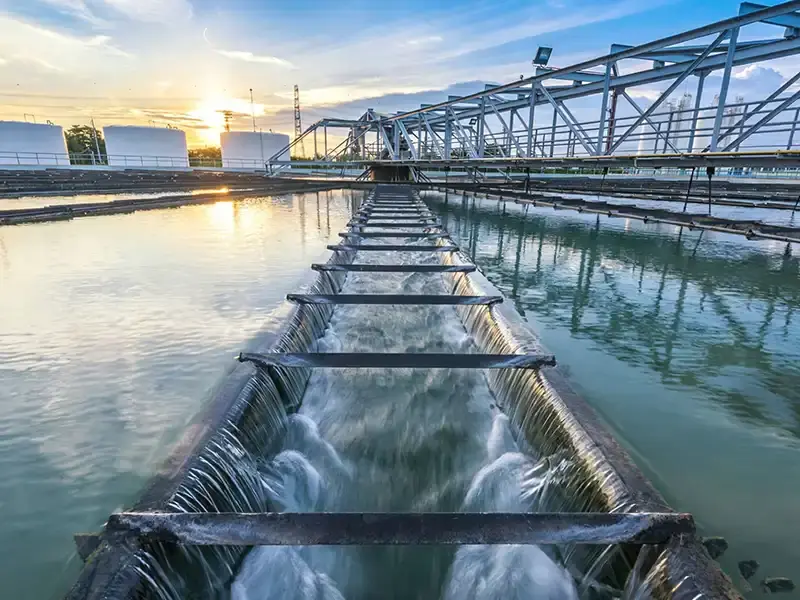
Water Treatment Industry
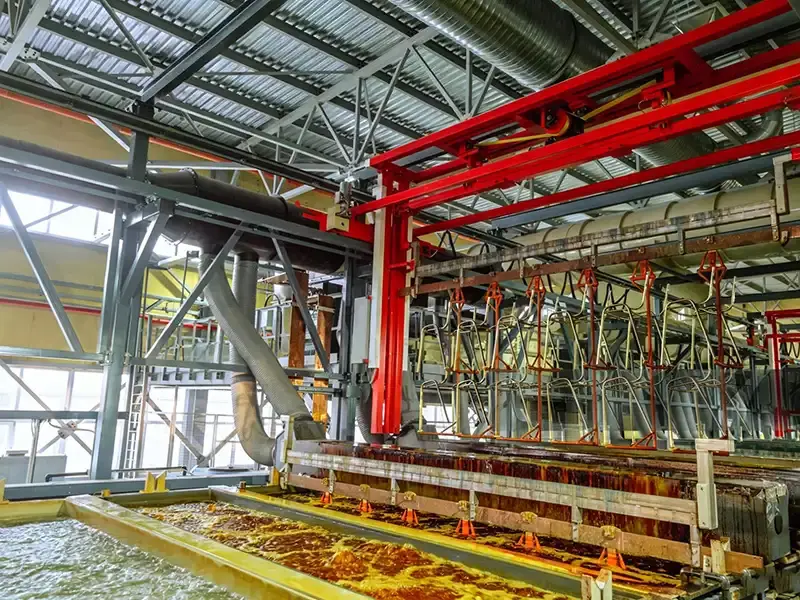
Electroplating Industry
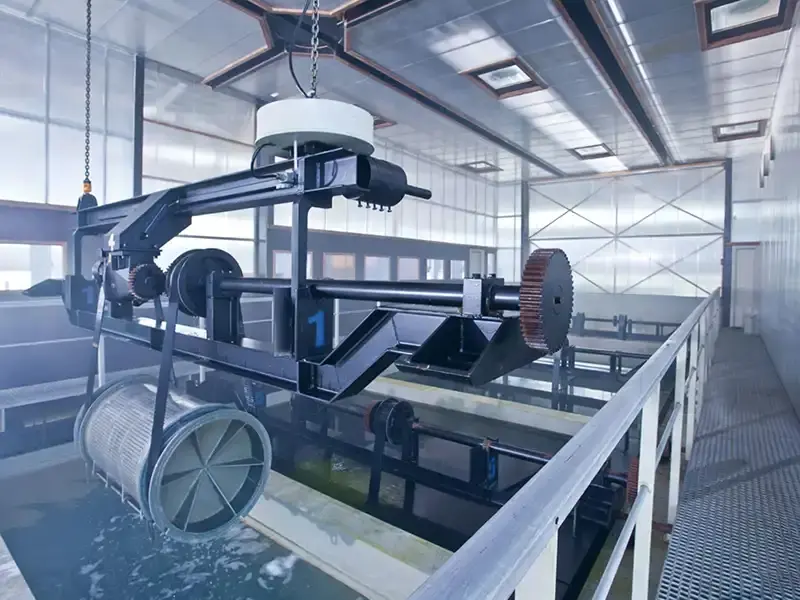
Chlor-Alkali Industry
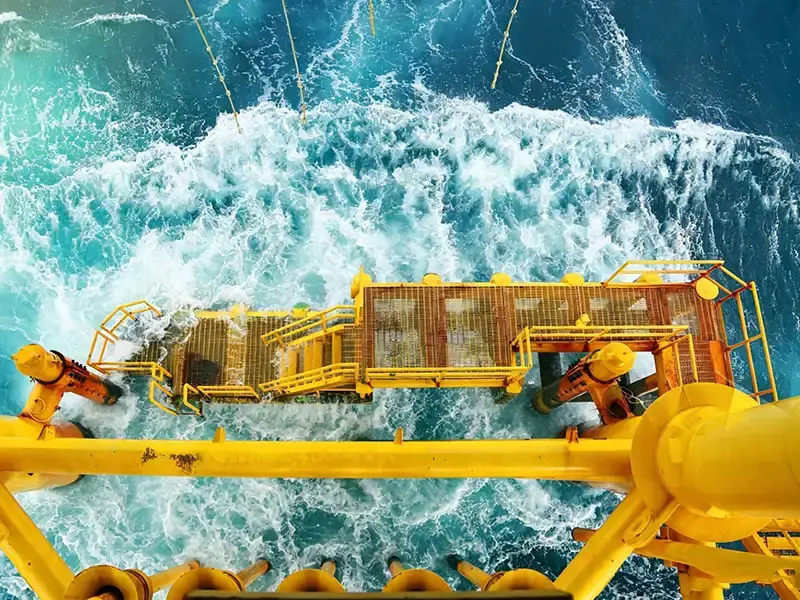
Marine Engineering
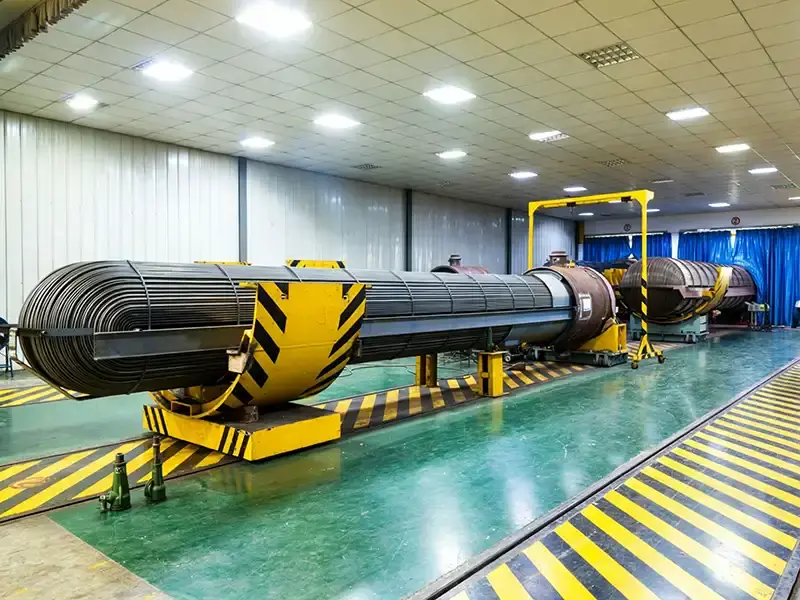
Hydrogen Energy Industry
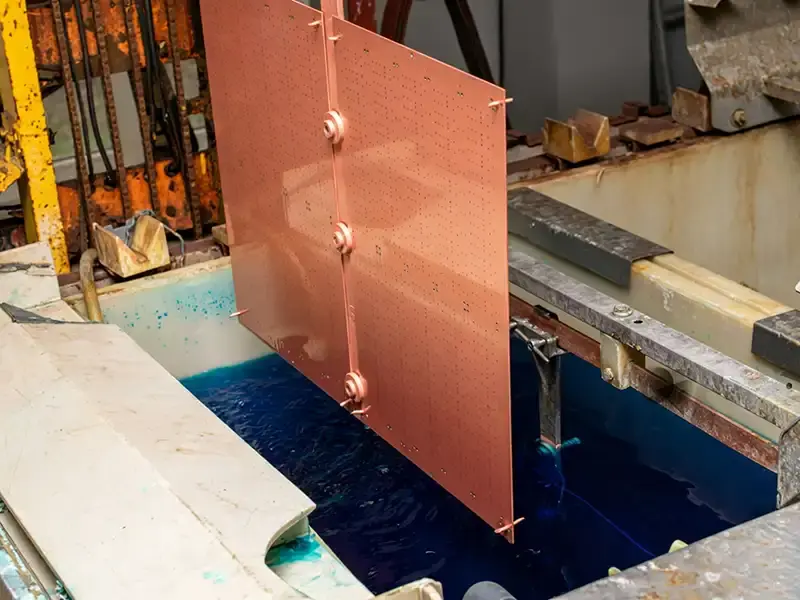
Mining and Metal Recovery
How to Purchase the Suitable Titanium Anode
Selection Checklist
- Confirm electrolyzer type (membrane or diaphragm)
- Evaluate brine purity and concentration
- Determine required current density range
- Select appropriate plate structure (solid/perforated/mesh)
- Choose Ru+Ir coating composition
- Evaluate chlorine evolution efficiency requirements
- Check operating temperature conditions
- Confirm power supply compatibility
- Review electrode spacing design
- Ensure installation space compatibility
- Evaluate expected service life requirements
- Request technical drawings and performance data
- Confirm OEM customization options
- Consult supplier for system optimization
- Verify maintenance and replacement strategy
Proper selection ensures high efficiency, stable chlorine production, and long-term reliable operation in chlor-alkali industry applications.

FAQ
Q1. What is the main function of this anode plate?
It is used for chlorine production in chlor-alkali electrolysis systems.
Q2. What coating is used?
Ru+Ir mixed metal oxide coating.
Q3. How long is the service life?
Typically 5–10 years depending on conditions.
Q4. Is it suitable for membrane cells?
Yes, it is widely used in membrane cell systems.
Q5. Can it be customized?
Yes, OEM/ODM customization is available.
Q6. Does it improve efficiency?
Yes, it enhances current distribution and reduces energy consumption.
Our Factory
Production site
State-of-the-art manufacturing for titanium anodes, precision coating and quality control.

Choseing titanium substrate
|

Substrate Cutting
|

Sandblasting
|

Pickling
|

Laser Cutting Configure Precious
Metal
|

Coating
|

Sintering
|

Packaging
|
Workshop
Precision machining and coating workshop for titanium anodes.

Titanium anode coating workshop
|

Thermal decomposition sintering furnace workshop
|

Titanium mesh anode production area
|

Pickling/surface treatment process
|

Pickling/surface treatment process
|

Quality inspection workshop
|

Worker operation photos
|

Panoramic view of a clean production line
|
Quality inspection
Rigorous testing for coating adhesion, electrochemical performance, and durability.

Dimension Inspection
|

Coating Thickness Testing
|

Coating Adhesion Testing
|

Microstructure Analysis
|

Conductivity Testing
|

Corrosion Resistance Testing
|

Bond Strength Testing
|

Final Inspection & Packaging
|
Packaging
Professional packaging to prevent damage and corrosion during transportation.
 |
 |
 |
 |
 |
 |
 |
 |
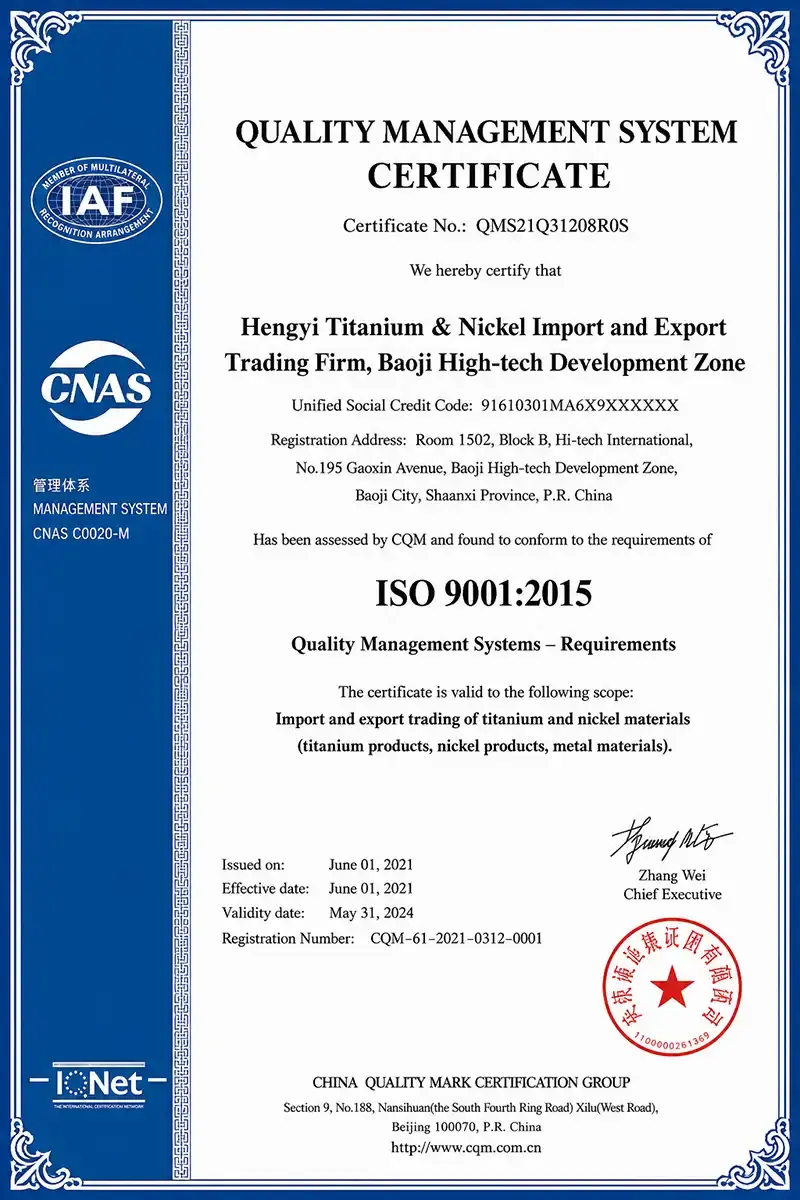
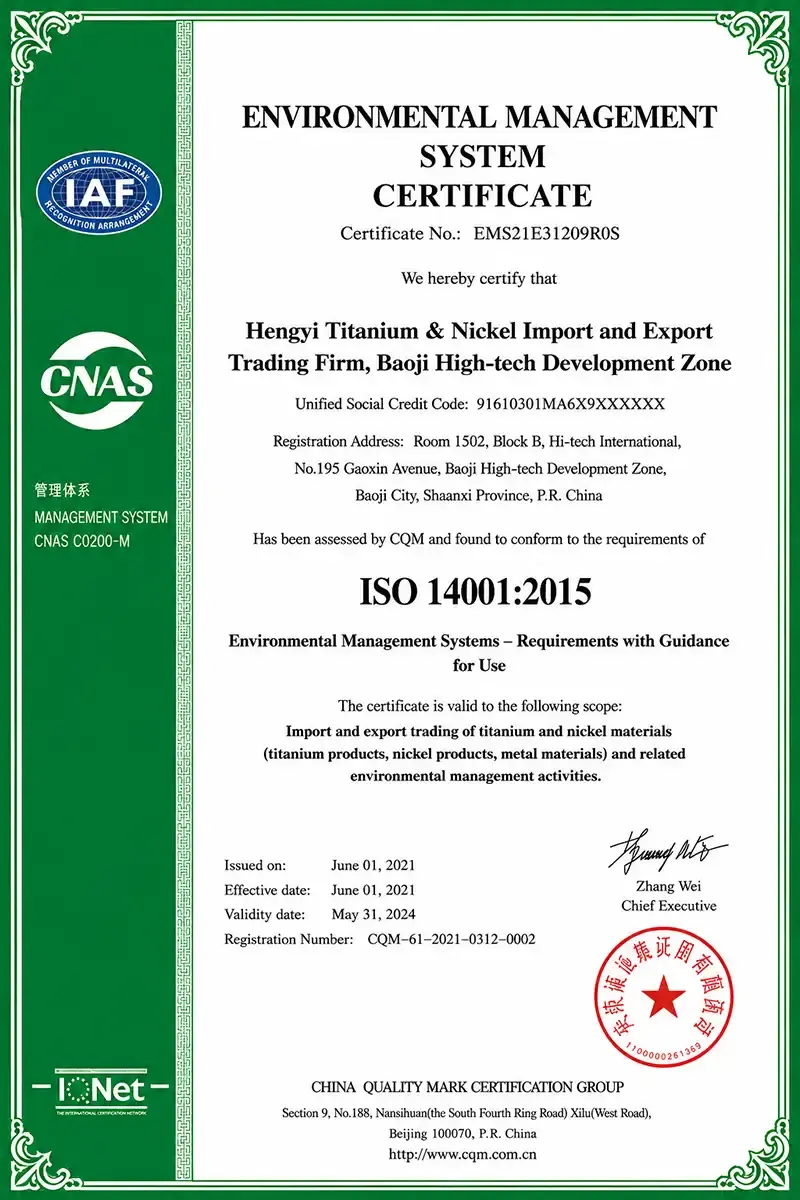
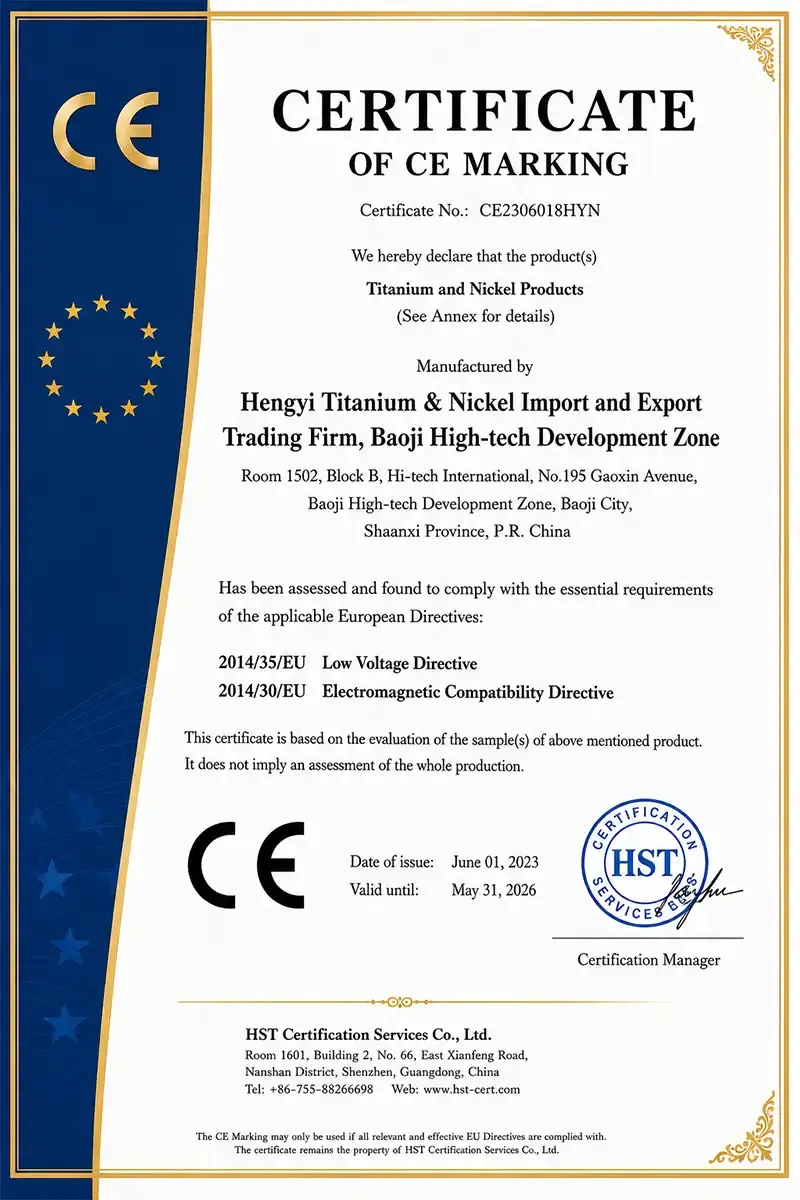
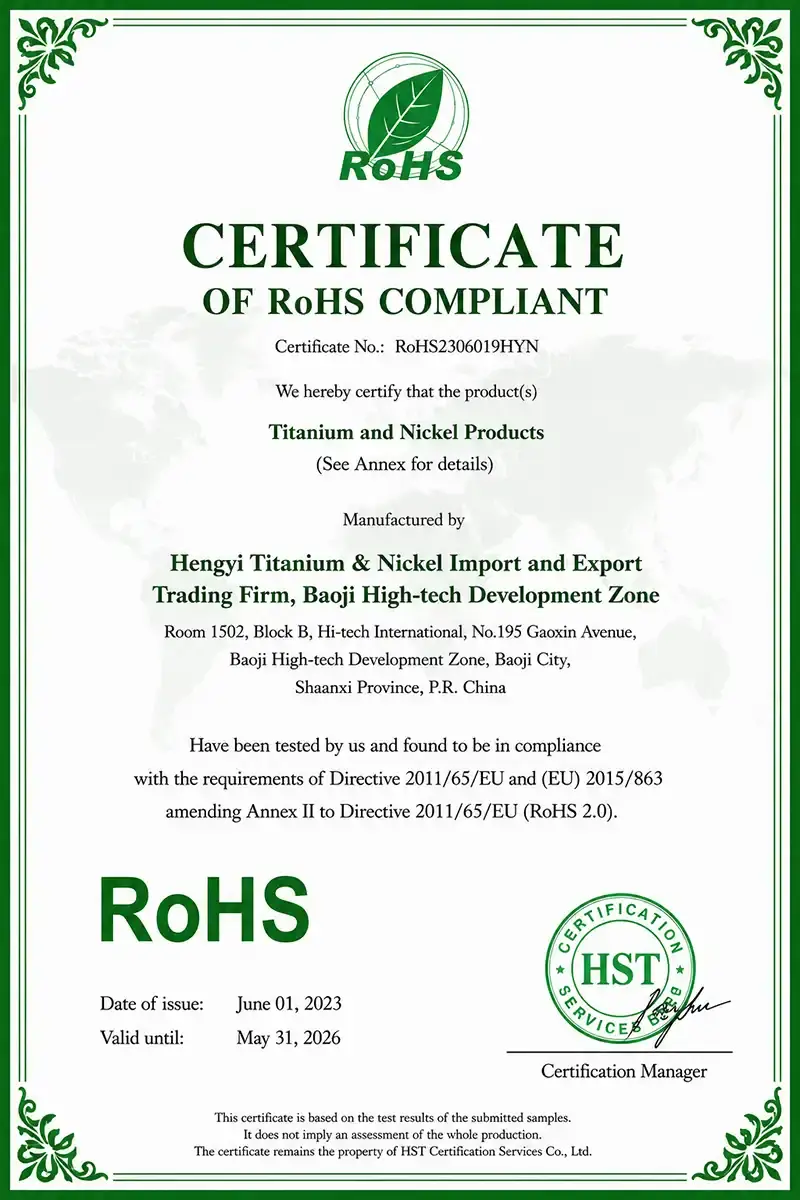
Certifications
International certifications ensuring quality and environmental compliance.
_1781572616895.jpg)
Learn about our latest products and discounts through SMS or email