- English
- French
- German
- Portuguese
- Spanish
- Russian
- Japanese
- Korean
- Arabic
- Greek
- German
- Turkish
- Italian
- Danish
- Romanian
- Indonesian
- Czech
- Afrikaans
- Swedish
- Polish
- Basque
- Catalan
- Esperanto
- Hindi
- Lao
- Albanian
- Amharic
- Armenian
- Azerbaijani
- Belarusian
- Bengali
- Bosnian
- Bulgarian
- Cebuano
- Chichewa
- Corsican
- Croatian
- Dutch
- Estonian
- Filipino
- Finnish
- Frisian
- Galician
- Georgian
- Gujarati
- Haitian
- Hausa
- Hawaiian
- Hebrew
- Hmong
- Hungarian
- Icelandic
- Igbo
- Javanese
- Kannada
- Kazakh
- Khmer
- Kurdish
- Kyrgyz
- Latin
- Latvian
- Lithuanian
- Luxembou..
- Macedonian
- Malagasy
- Malay
- Malayalam
- Maltese
- Maori
- Marathi
- Mongolian
- Burmese
- Nepali
- Norwegian
- Pashto
- Persian
- Punjabi
- Serbian
- Sesotho
- Sinhala
- Slovak
- Slovenian
- Somali
- Samoan
- Scots Gaelic
- Shona
- Sindhi
- Sundanese
- Swahili
- Tajik
- Tamil
- Telugu
- Thai
- Ukrainian
- Urdu
- Uzbek
- Vietnamese
- Welsh
- Xhosa
- Yiddish
- Yoruba
- Zulu
Titanium anode for electrodialysis to remove acid water
Coating: Ru-Ir mixed metal oxide
Current Density: 200–3000 A/m²
Temperature Range: 5°C to 60°C
Acid Concentration: 0.5–15 wt%
Acid Recovery Rate: ≥85%
Design Life: ≥8 years
Application: Acid water electrodialysis treatment systems
What Is Titanium Anode for Electrodialysis to Remove Acid Water and How to Choose the Right One for Your Industry?
A Titanium Anode for Electrodialysis to Remove Acid Water is a specialized electrochemical electrode used in electrodialysis (ED) systems to separate, recover, and remove acidic ions from industrial wastewater. Acid-containing wastewater is commonly generated in metal finishing, pickling, mining, chemical processing, battery manufacturing, and semiconductor industries. These waste streams often contain sulfuric acid, hydrochloric acid, nitric acid, and dissolved metal ions that require efficient treatment before discharge or reuse.
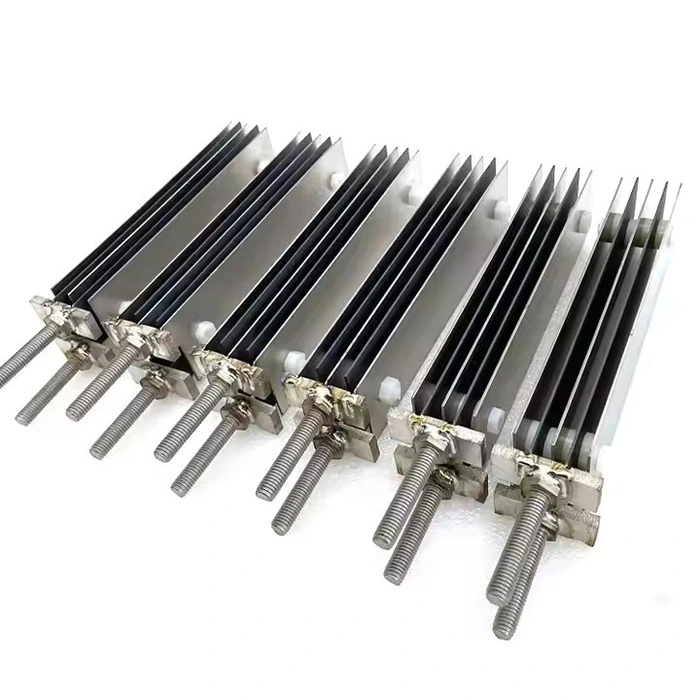
The Titanium Anode for Electrodialysis to Remove Acid Water typically utilizes a Grade 1 or Grade 2 titanium substrate coated with ruthenium-iridium mixed metal oxides (Ru+Ir MMO). This advanced coating provides excellent conductivity, low oxygen evolution overpotential, superior corrosion resistance, and long-term stability under acidic operating conditions.
During electrodialysis, the anode facilitates ion migration through ion-exchange membranes, enabling acid recovery and wastewater purification. Compared with conventional electrodes, MMO-coated titanium anodes offer lower energy consumption, higher current efficiency, and significantly longer service life.
When selecting an electrode, factors such as acid concentration, current density, operating temperature, membrane compatibility, electrolyte composition, and system voltage should be carefully evaluated. Choosing the appropriate coating formulation, electrode geometry, and coating loading can maximize electrodialysis efficiency while minimizing operating costs and maintenance requirements.
 |
 |
 |
 |
Features of Titanium Anode for Electrodialysis to Remove Acid Water
Superior Corrosion Resistance、Ultra-Long Service Life、High Electrocatalytic Activity & Efficiency、Eco-Friendly、Low Maintenance




Full Customization Solutions to Meet Your Specific Needs!
Customization Available (Size, Material, Coating, Shape, Lifespan & Installation)
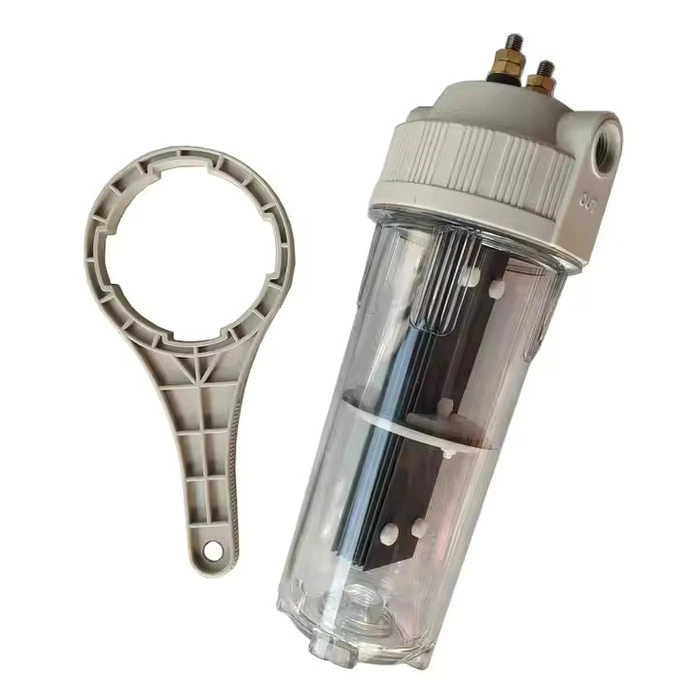
Titanium anode for electrodialysis to remove acid water can be fully customized according to industrial requirements:
HY Ti-Ni Import & Export provides complete customization services for Titanium Anodes for Electrodialysis to Remove Acid Water.
Available Custom Options
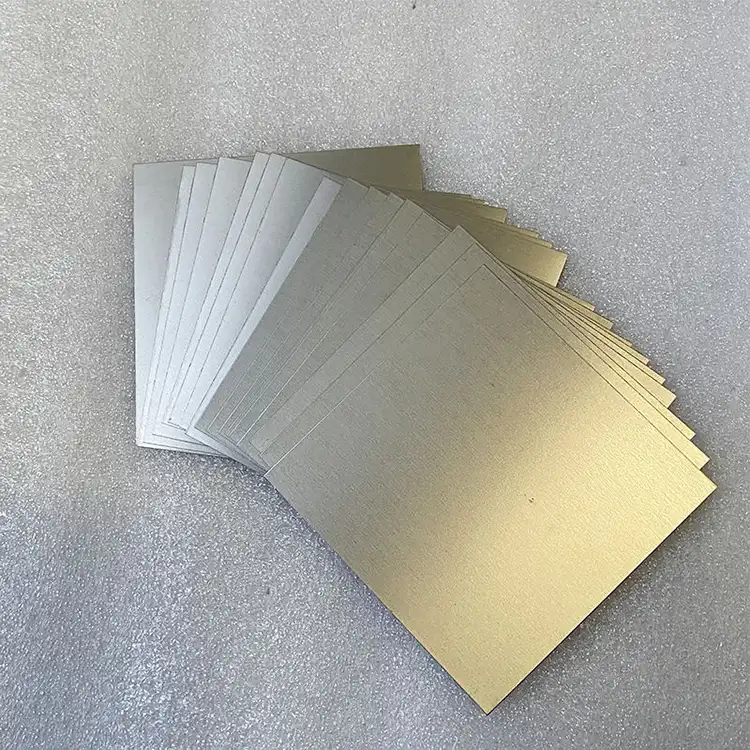
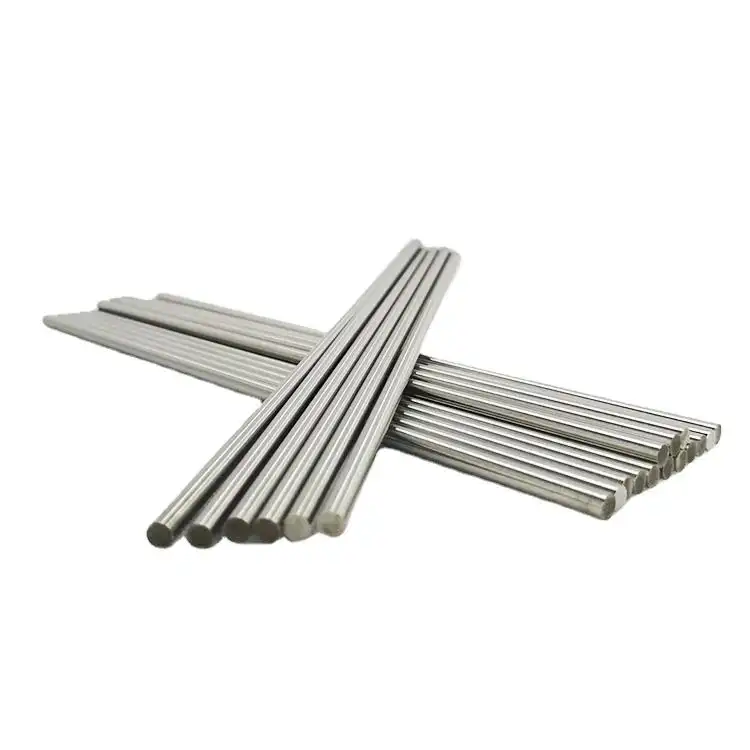
- Custom mesh, plate, rod, tube, and ribbon designs
- Titanium Grade 1 or Grade 2 substrates
- Customized Ru+Ir coating formulations
- Coating loading from 6–20 g/m²
- Single-side or double-side coating
- Custom electrode dimensions and thickness
- High-current-density electrode designs
- Low-voltage electrodialysis optimization
- Enhanced acid-resistant coating systems
- Custom busbars and electrical connections
- Modular electrode assemblies
- High-temperature operating designs
- Extended lifespan coating solutions
- OEM branding and packaging
- Customized mounting frames and supports
Why Choose Titanium Anode from HY Ti-Ni Import & Export?
At Hengyi Ti-Ni Import Export, we specialize in titanium-based electrochemical materials with strong engineering capability in anode system design.

HY Ti-Ni Import & Export is a professional manufacturer and supplier of Titanium Anodes for Electrodialysis to Remove Acid Water. Located in Baoji, China's leading titanium production center, we combine advanced MMO coating technology with strict quality management to deliver reliable electrochemical solutions worldwide.
Our products are manufactured using premium titanium substrates and precision thermal decomposition coating processes. Every electrode undergoes rigorous testing for coating adhesion, electrochemical activity, dimensional accuracy, and service life performance.
Advantages of working with us include:
- Advanced Ru+Ir coating technology
- Excellent corrosion resistance
- High current efficiency
- Long service life
- Competitive factory pricing
- Fast international delivery
- OEM and ODM capability
- Professional technical support
- Complete quality inspection reports
- Responsive after-sales service
We help customers achieve efficient acid recovery and wastewater treatment performance.
Titanium Anode Purchase Guide: A Comprehensive Guide
Choosing the right Titanium Anode for Electrodialysis to Remove Acid Water is essential for achieving high acid recovery efficiency, stable system operation, and low long-term operating costs. Since electrodialysis systems often process highly corrosive acidic solutions, electrode quality directly affects performance, energy consumption, and service life.
Begin by identifying the type and concentration of acids in the wastewater, such as sulfuric acid, hydrochloric acid, nitric acid, or mixed acid solutions. Different acid compositions may require specific coating formulations to ensure optimal electrochemical activity and corrosion resistance.
Next, evaluate the operating conditions, including current density, temperature, flow rate, conductivity, and system voltage. These factors determine the appropriate electrode size, coating loading, and structural design. Titanium mesh anodes are commonly selected for high surface area applications, while plate and tubular anodes are suitable for larger industrial electrodialysis systems.
It is also important to consider membrane compatibility and desired acid recovery rates. Proper matching between the electrode and membrane system improves ion transfer efficiency and reduces energy consumption.
When purchasing, select a supplier with proven MMO coating technology, strict quality control procedures, and customization capabilities. Request technical drawings, coating specifications, inspection reports, and lifespan estimates before production. A well-designed titanium anode can significantly improve acid recovery performance, extend maintenance intervals, and provide a higher return on investment throughout the life of the electrodialysis system.
Purchase Guide
1. What is a Titanium anode for electrodialysis to remove acid water? |
Products Introduction
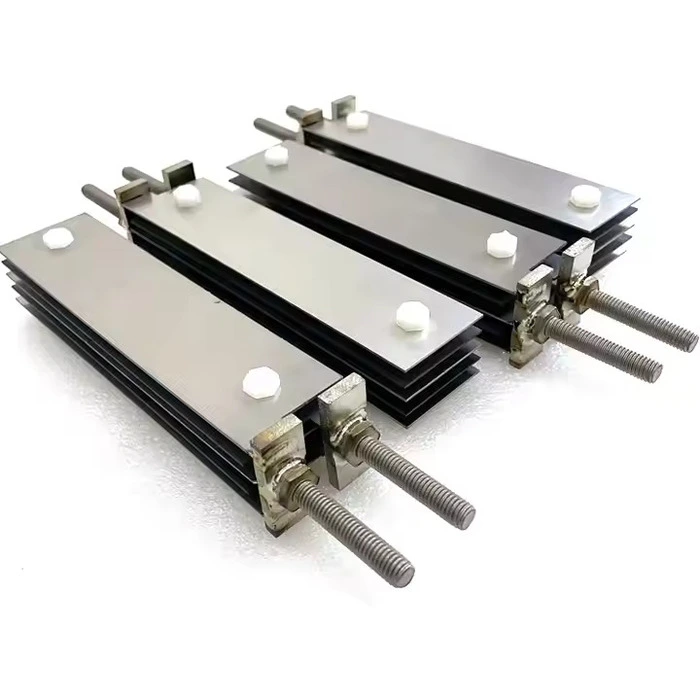
What Is Titanium anode for electrodialysis to remove acid water?
A Titanium Anode for Electrodialysis to Remove Acid Water is an insoluble electrode designed for electrodialysis systems used in acid wastewater treatment and acid recovery applications. The electrode consists of a titanium substrate coated with ruthenium-iridium mixed metal oxides that provide excellent conductivity and corrosion resistance.
During operation, the electrode promotes efficient ion transfer across ion-exchange membranes while maintaining stable electrochemical performance in highly acidic environments. It is widely used for sulfuric acid recovery, hydrochloric acid recycling, nitric acid treatment, and industrial wastewater purification. Its long lifespan and low energy consumption make it ideal for continuous industrial operation.
Main Technical Parameters
| Parameter | Specification |
|---|---|
| Product Name | Titanium Anode for Electrodialysis to Remove Acid Water |
| Coating Type | RuO₂ + IrO₂ |
| Substrate Material | ASTM B265 Gr1 / Gr2 Titanium |
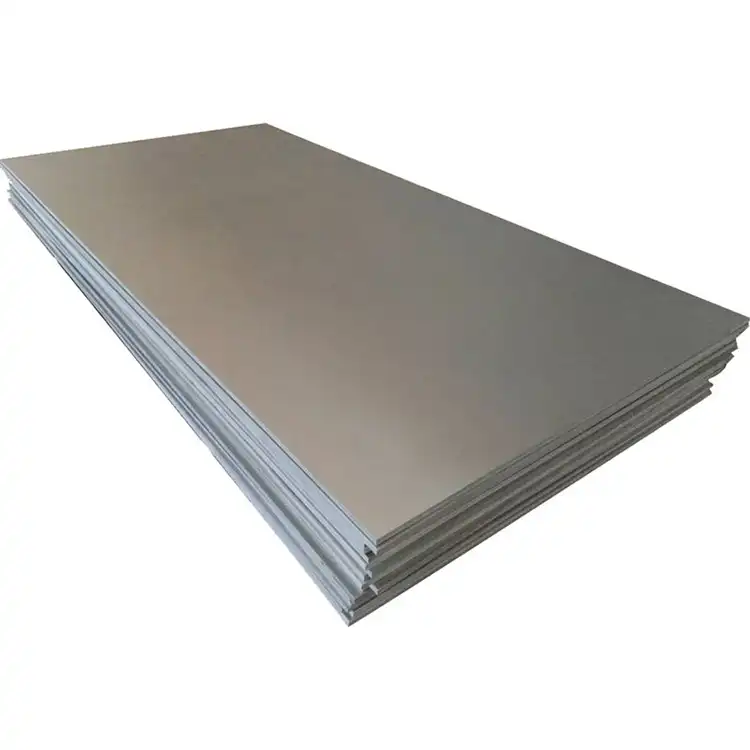
| Coating Loading | 6–20 g/m² |
| Current Density | 500–3000 A/m² |
| Operating Voltage | 1.0–1.8 V |
| Working Temperature | ≤80°C |
| pH Range | 0–14 |
| Acid Resistance | Excellent |
| Oxygen Evolution Potential | ≤1.45 V |
| Service Life | 3–8 Years |
| Coating Adhesion | Excellent |
Specifications
| Type | Standard Size | Thickness |
| Titanium Mesh Anode | 100×100 mm – 1500×3000 mm | 1–3 mm |
| Titanium Plate Anode | 100×100 mm – 2000×4000 mm | 2–10 mm |
| Titanium Rod Anode | Ø6–50 mm | Custom |
| Titanium Tube Anode | Ø10–100 mm | Custom |
| Titanium Ribbon Anode | 6.35×0.635 mm | Custom |
| Titanium Wire Anode | Ø1–10 mm | Custom |
Cerrent output of Standard
| Electrode Type | Recommended Current Density | Maximum Current Output |
| Titanium Mesh Anode | 500–1500 A/m² | 3000 A/m² |
| Titanium Plate Anode | 1000–2500 A/m² | 5000 A/m² |
| Titanium Rod Anode | 500–2000 A/m² | 3500 A/m² |
| Titanium Tube Anode | 800–2500 A/m² | 4500 A/m² |
| Titanium Ribbon Anode | 200–1000 A/m² | 1500 A/m² |
Applications of MMO Titanium Anode
Be used in a wide range of industries.
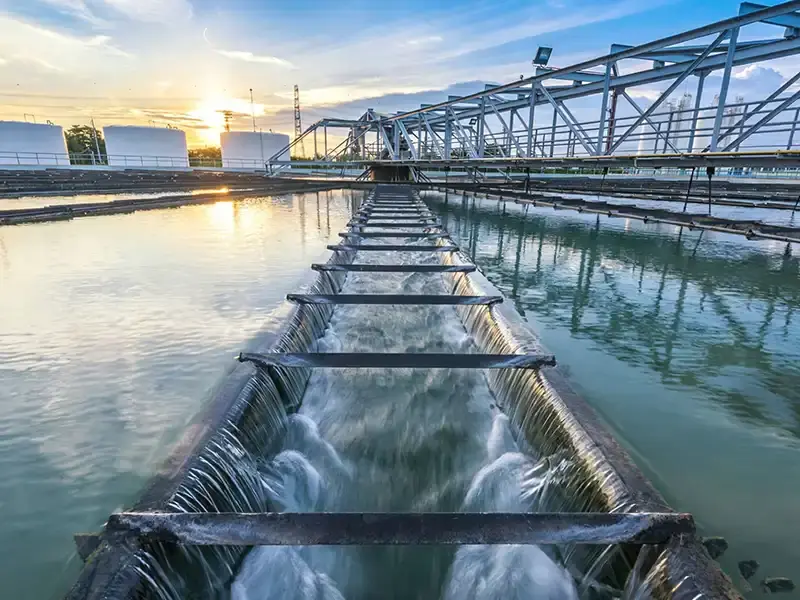
Water Treatment Industry
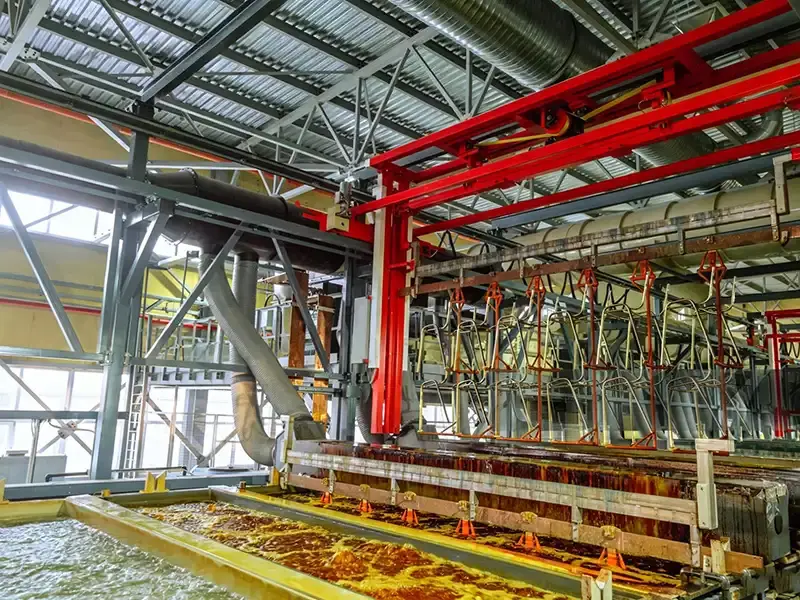
Electroplating Industry
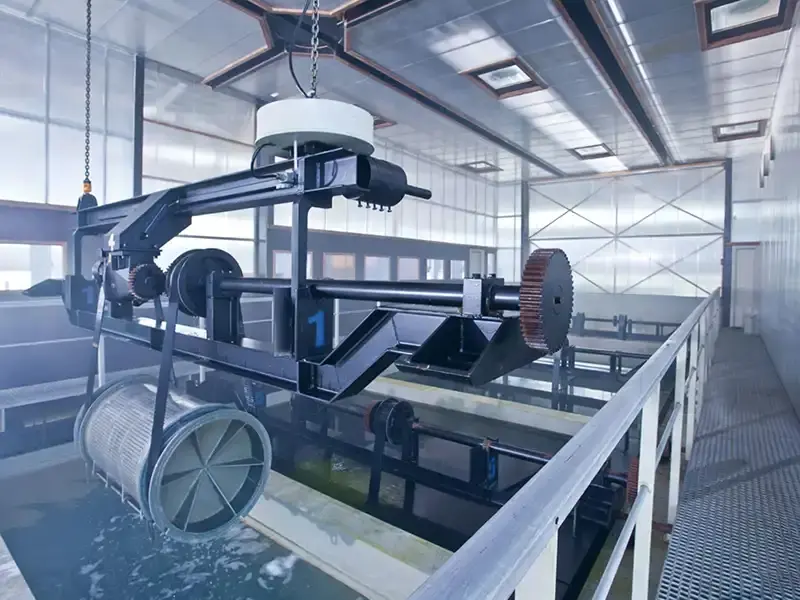
Chlor-Alkali Industry
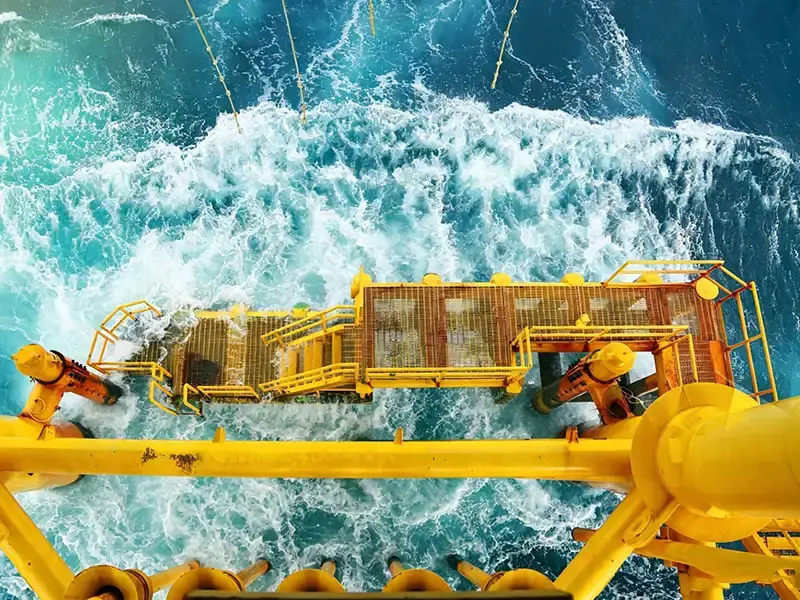
Marine Engineering
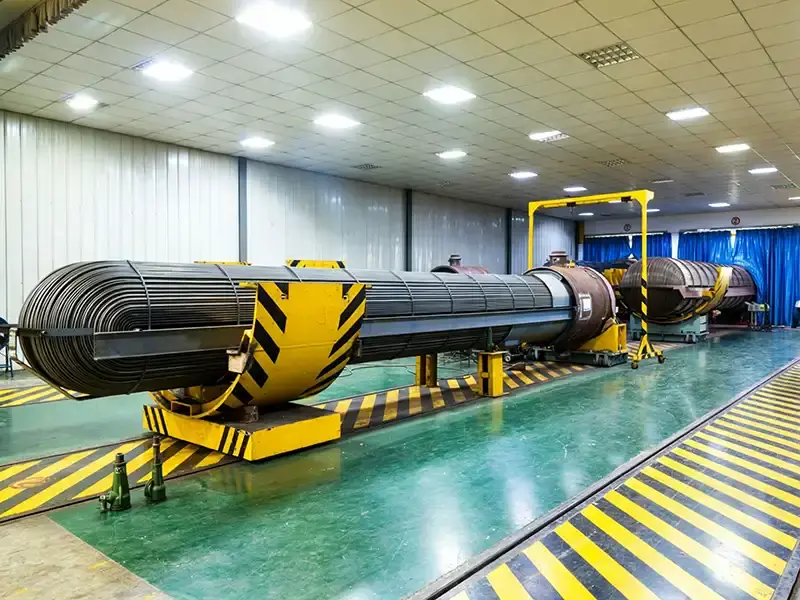
Hydrogen Energy Industry
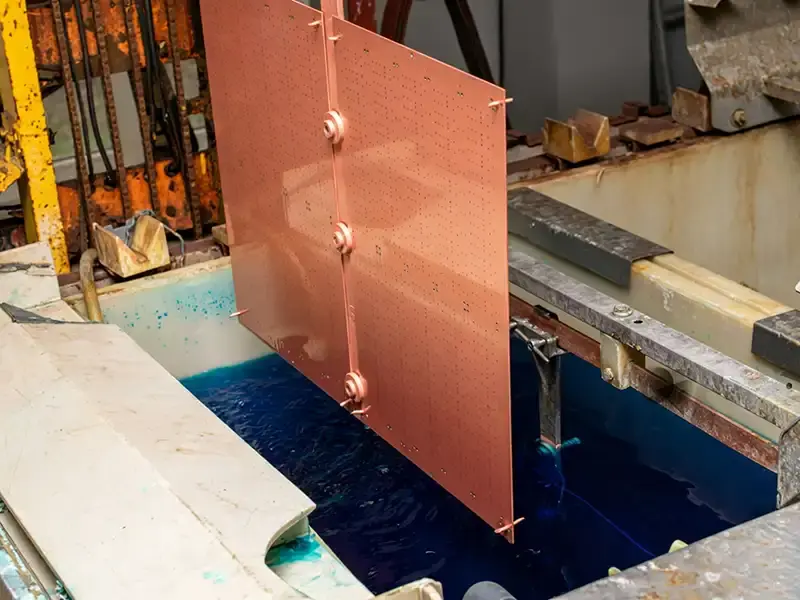
Mining and Metal Recovery
How to Purchase the Suitable Titanium Anode
Selection Checklist
- Identify acid type and concentration.
- Determine wastewater composition.
- Confirm electrodialysis system capacity.
- Evaluate membrane compatibility.
- Select proper electrode geometry.
- Choose suitable titanium grade.
- Verify operating temperature conditions.
- Calculate required current density.
- Determine desired acid recovery efficiency.
- Select appropriate coating loading.
- Review power supply specifications.
- Consider expected service life.
- Evaluate maintenance requirements.
- Request technical drawings and reports.
- Discuss customization requirements with manufacturer.
Working with an experienced supplier ensures proper electrode selection, improved acid recovery efficiency, lower energy consumption, and longer operating life. Custom-designed electrodes often provide superior performance compared with standard products, especially in demanding industrial wastewater treatment applications.
FAQ
Q1. What acids can this electrode handle?
Sulfuric acid, hydrochloric acid, nitric acid, and mixed acid solutions.
Q2. What coating is commonly used?
Ru+Ir mixed metal oxide coating.
Q3. How long does the electrode last?
Typically 3–8 years depending on operating conditions.
Q4. Can custom dimensions be produced?
Yes. Full OEM and ODM customization is available.
Q5. Is it suitable for continuous operation?
Yes. It is designed for long-term industrial electrodialysis systems.
Q6. Does it support acid recovery applications?
Yes. It is widely used in acid recovery and recycling systems.
Our Factory
Production site
State-of-the-art manufacturing for titanium anodes, precision coating and quality control.

Choseing titanium substrate
|

Substrate Cutting
|

Sandblasting
|

Pickling
|

Laser Cutting Configure Precious
Metal
|

Coating
|

Sintering
|

Packaging
|
Workshop
Precision machining and coating workshop for titanium anodes.

Titanium anode coating workshop
|

Thermal decomposition sintering furnace workshop
|

Titanium mesh anode production area
|

Pickling/surface treatment process
|

Pickling/surface treatment process
|

Quality inspection workshop
|

Worker operation photos
|

Panoramic view of a clean production line
|
Quality inspection
Rigorous testing for coating adhesion, electrochemical performance, and durability.

Dimension Inspection
|

Coating Thickness Testing
|

Coating Adhesion Testing
|

Microstructure Analysis
|

Conductivity Testing
|

Corrosion Resistance Testing
|

Bond Strength Testing
|

Final Inspection & Packaging
|
Packaging
Professional packaging to prevent damage and corrosion during transportation.
 |
 |
 |
 |
 |
 |
 |
 |
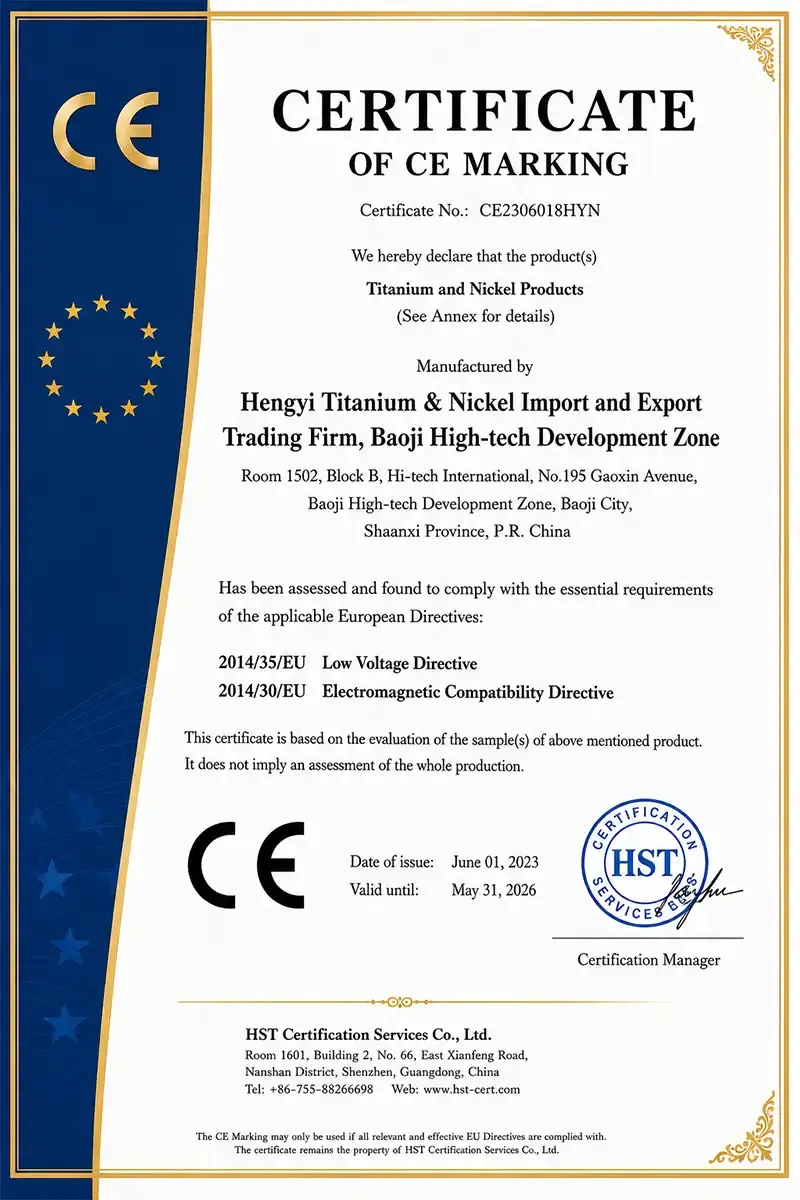
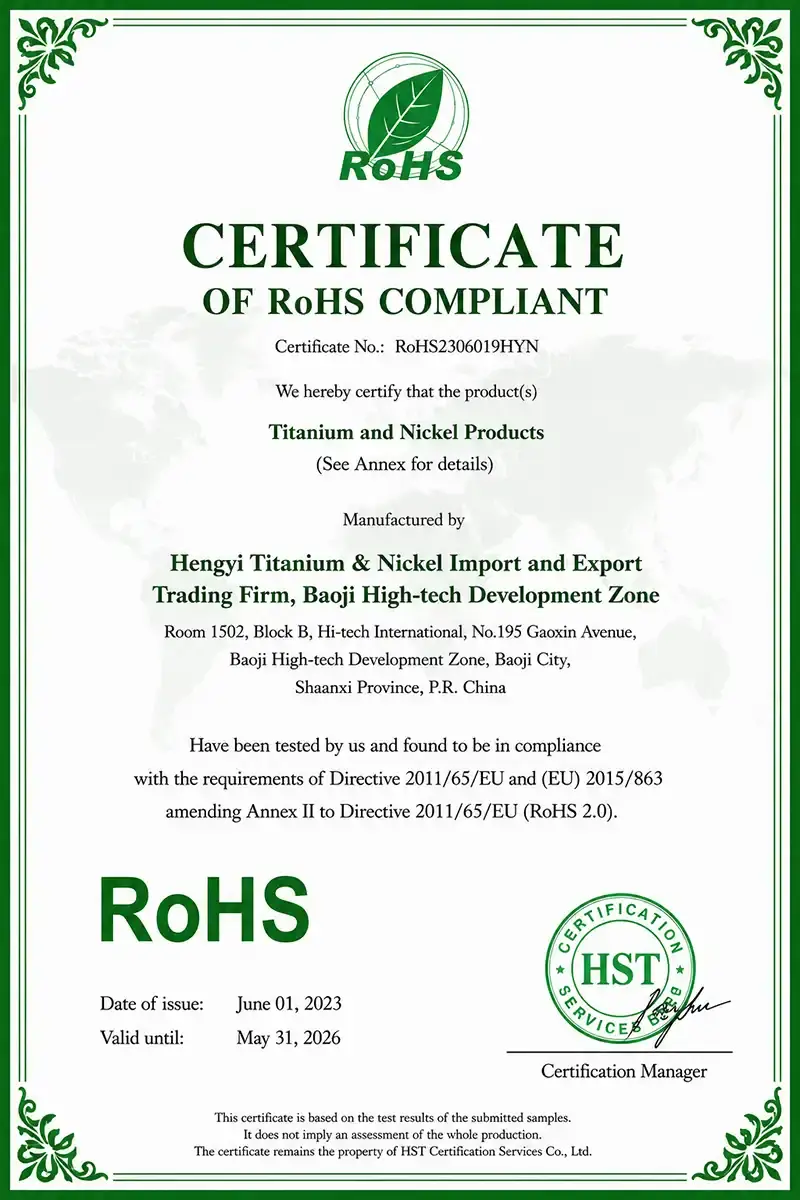
Certifications
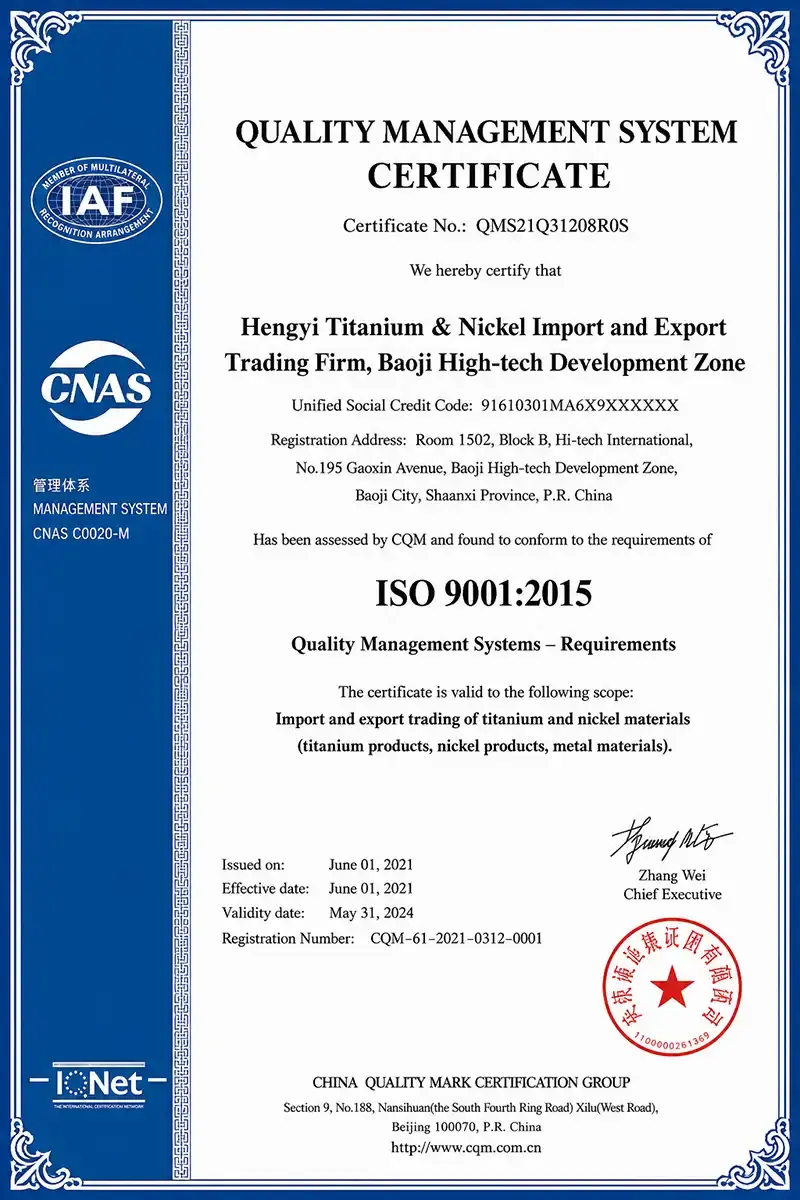
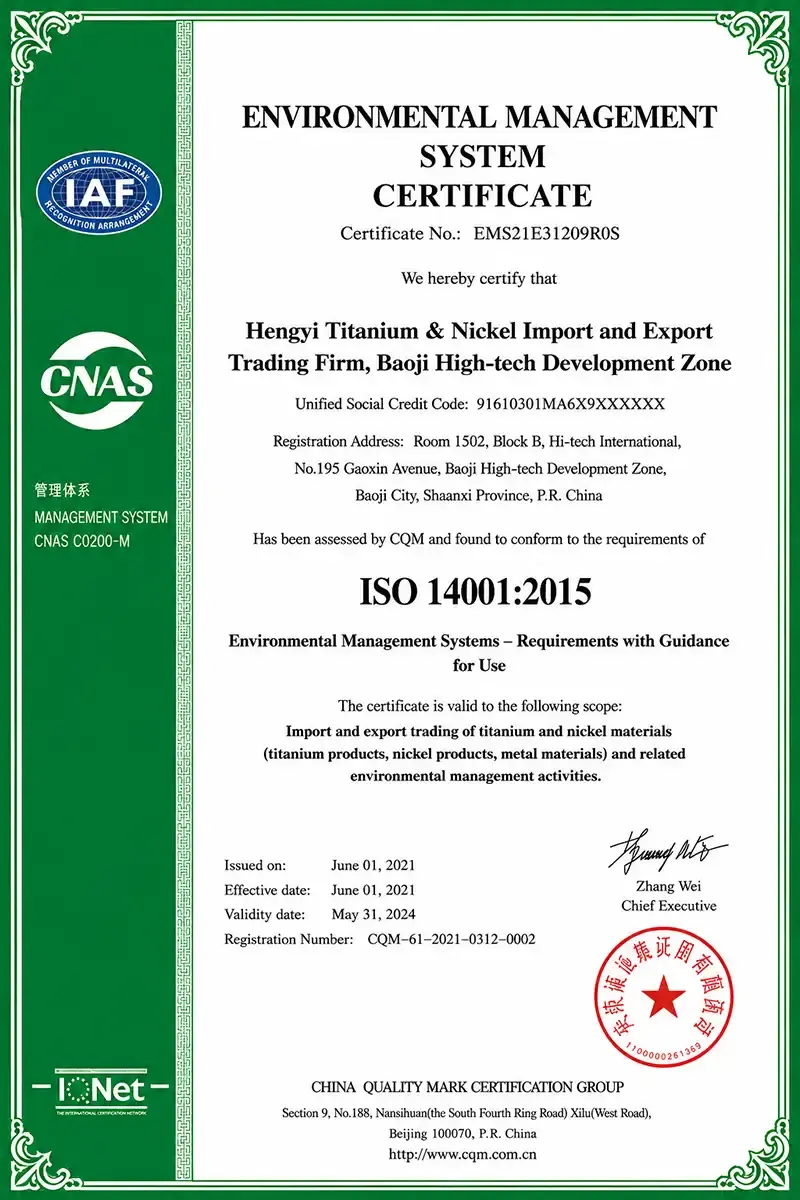
International certifications ensuring quality and environmental compliance.
_1781505753564.jpg)
Learn about our latest products and discounts through SMS or email