- English
- French
- German
- Portuguese
- Spanish
- Russian
- Japanese
- Korean
- Arabic
- Greek
- German
- Turkish
- Italian
- Danish
- Romanian
- Indonesian
- Czech
- Afrikaans
- Swedish
- Polish
- Basque
- Catalan
- Esperanto
- Hindi
- Lao
- Albanian
- Amharic
- Armenian
- Azerbaijani
- Belarusian
- Bengali
- Bosnian
- Bulgarian
- Cebuano
- Chichewa
- Corsican
- Croatian
- Dutch
- Estonian
- Filipino
- Finnish
- Frisian
- Galician
- Georgian
- Gujarati
- Haitian
- Hausa
- Hawaiian
- Hebrew
- Hmong
- Hungarian
- Icelandic
- Igbo
- Javanese
- Kannada
- Kazakh
- Khmer
- Kurdish
- Kyrgyz
- Latin
- Latvian
- Lithuanian
- Luxembou..
- Macedonian
- Malagasy
- Malay
- Malayalam
- Maltese
- Maori
- Marathi
- Mongolian
- Burmese
- Nepali
- Norwegian
- Pashto
- Persian
- Punjabi
- Serbian
- Sesotho
- Sinhala
- Slovak
- Slovenian
- Somali
- Samoan
- Scots Gaelic
- Shona
- Sindhi
- Sundanese
- Swahili
- Tajik
- Tamil
- Telugu
- Thai
- Ukrainian
- Urdu
- Uzbek
- Vietnamese
- Welsh
- Xhosa
- Yiddish
- Yoruba
- Zulu
Titanium anode for removing marine organisms attached to seawater by electrochemical method
Ru-Ir oxide coating, 25–45 μm
Current density: 400–550 A/m²
Operating temp: 0–65 ℃
Working voltage: 2.8–3.6 V
Service life: 15–20 years
pH range: 2–11 stable
Coating loss: ≤5 mg/A·y
What Is Titanium anode for removing marine organisms attached to seawater by electrochemical method and How to Choose the Right One for Your Industry?
Titanium anode for removing marine organisms attached to seawater by electrochemical method is an advanced electrochemical anti-fouling solution designed for marine systems, seawater pipelines, heat exchangers, and cooling circuits. It works by generating low-level oxidizing substances such as chlorine through seawater electrolysis, effectively preventing the attachment and growth of algae, barnacles, and microorganisms on metal surfaces. Compared with traditional chemical cleaning methods, this system provides continuous, environmentally friendly, and low-maintenance protection.
In industrial and marine environments, biofouling can significantly reduce heat transfer efficiency and increase energy consumption. This titanium anode system ensures stable anti-fouling performance even under high salinity and long-term continuous operation. The key advantage is its MMO coating structure, which offers high catalytic efficiency and extremely long service life.
When selecting the right titanium anode, users should consider seawater salinity, flow rate, installation environment (open sea, coastal, or closed-loop system), and required current density. Proper selection ensures maximum efficiency and operational stability in different marine engineering applications.
 |
 |
 |
 |
Features of Titanium anode for removing marine organisms attached to seawater by electrochemical method
Superior Corrosion Resistance、Ultra-Long Service Life、High Electrocatalytic Activity & Efficiency、Eco-Friendly、Low Maintenance




Full Customization Solutions to Meet Your Specific Needs!
Customization Available (Size, Material, Coating, Shape, Lifespan & Installation)
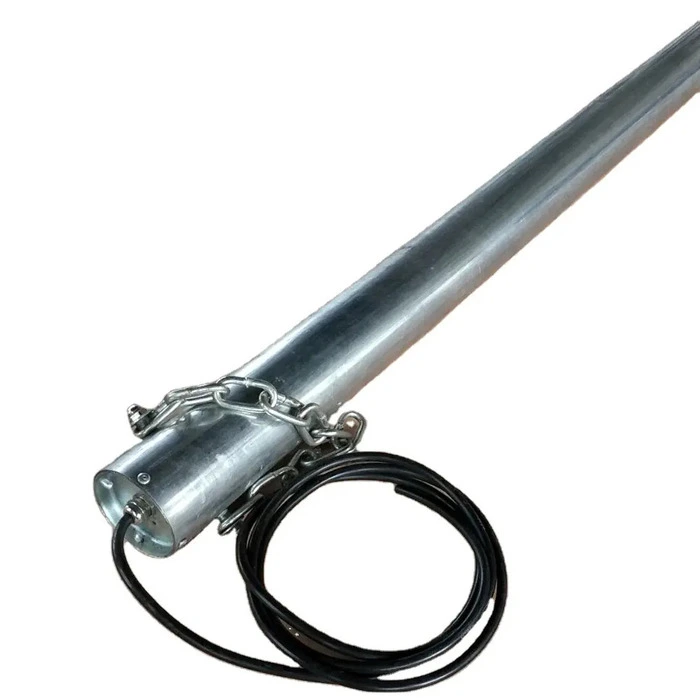
Titanium anode for removing marine organisms attached to seawater by electrochemical method can be fully customized according to industrial requirements:
- Custom size according to seawater system design
- Titanium substrate options: Gr1 / Gr2 titanium
- Coating systems: RuO₂-IrO₂ / Ru-Ir-Ta mixed oxide
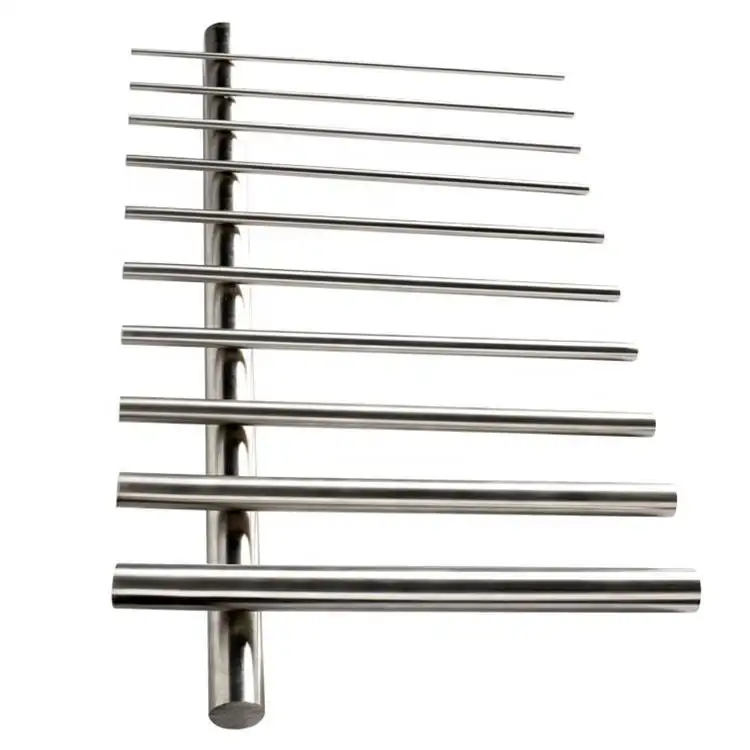
- Shape customization: mesh, tube, rod, plate, ribbon
- Adjustable current density for different seawater conditions
- Design lifespan: 10–25+ years depending on application
- OEM/ODM engineering support for marine systems
- Custom installation structures for pipelines and heat exchangers
Why Choose Titanium Anode from HY Ti-Ni Import & Export?
At Hengyi Ti-Ni Import Export, we specialize in titanium-based electrochemical materials with strong engineering capability in anode system design.

HY Ti-Ni Import & Export is a professional supplier of advanced titanium anode systems for marine and industrial electrochemical applications. We are located in Baoji High-tech Development Zone, China, where a complete titanium industrial chain supports strong manufacturing capability. Our products are engineered for high corrosion resistance, stable electrochemical output, and long service life in harsh seawater environments.
We provide full OEM/ODM customization, strict quality inspection, and stable global supply capability. Each titanium anode is tested under international standards to ensure reliability in marine anti-fouling systems. With strong engineering support and responsive service, we help customers reduce maintenance costs and improve system efficiency.
Titanium Anode Purchase Guide: A Comprehensive Guide
Before purchasing a titanium anode for marine anti-fouling systems, it is important to evaluate operating conditions such as seawater temperature, salinity, and flow velocity. These factors directly affect anode performance and service life.
You should also define installation type, such as pipe internal mounting, seawater intake systems, or heat exchanger integration. Current density and output requirements must match system scale to avoid underperformance or overloading.
Material selection is critical. Titanium grade and MMO coating type determine corrosion resistance and electrochemical efficiency. For long-term marine use, Ru-Ir based coatings are recommended due to strong chlorine evolution performance.
Finally, consider supplier capability in customization, quality control, and after-sales technical support. A reliable manufacturer ensures stable long-term operation and reduces downtime risks in marine environments.
Purchase Guide
1. What is a Titanium anode for removing marine organisms attached to seawater by electrochemical method? |
Products Introduction
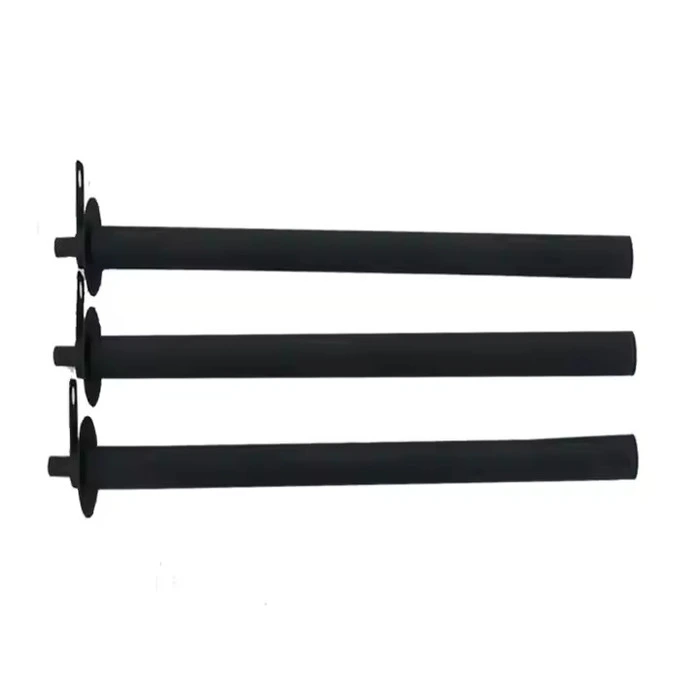
What Is Titanium anode for removing marine organisms attached to seawater by electrochemical method?
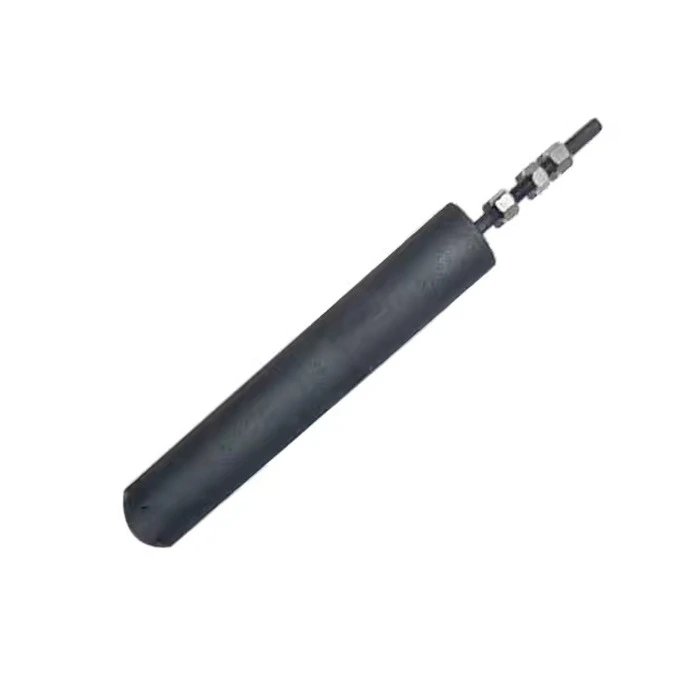
It is a titanium-based MMO electrode used for seawater electrolysis anti-fouling systems. It generates oxidizing agents that prevent marine organism attachment. It is widely used in seawater cooling systems, desalination plants, offshore platforms, and industrial marine pipelines for continuous biofouling control.
Main Technical Parameters
| Parameter | Typical Range |
|---|---|
| Base Material | Titanium Gr1 / Gr2 |
| Coating Type | RuO₂–IrO₂ / Mixed Metal Oxide |
| Current Density | 100 – 2000 A/m² |
| Operating Voltage | 1.0 – 1.5 V |
| Seawater Chlorine Output | 0.2 – 2.0 g/h·m² |
| Temperature Range | -10°C to 80°C |
| Design Life | 10 – 25 years |
| Installation Type | Pipeline / Heat exchanger / Marine system |
Specifications
| Type | Structure | Application |
|---|---|---|
| Mesh Anode | Open mesh design | Seawater intake systems |
| Tube Anode | Cylindrical structure | Pipeline anti-fouling |
| Plate Anode | Flat sheet type | Heat exchanger protection |
| Rod Anode | Linear structure | Compact seawater systems |
| Custom System | OEM design | Marine engineering projects |
Cerrent output of Standard
| Type | Current Output (mA/m²) | Application Condition |
|---|---|---|
| Standard System | 10 – 30 | Low fouling seawater |
| Medium Output | 30 – 60 | Coastal seawater systems |
| High Output | 50 – 100 | Heavy marine fouling zones |
| Industrial System | 20 – 80 | Cooling water systems |
| Customized System | Up to 100+ | Offshore platforms |
Applications of MMO Titanium Anode
Be used in a wide range of industries.
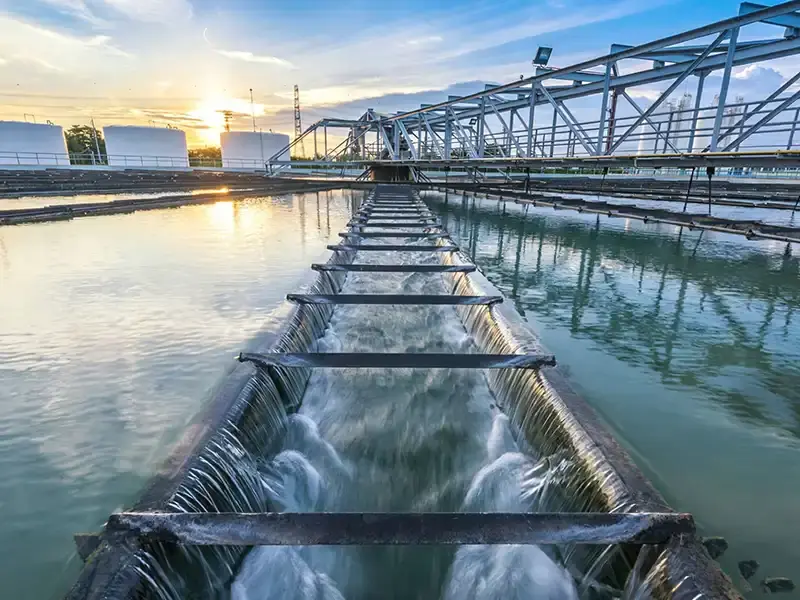
Water Treatment Industry
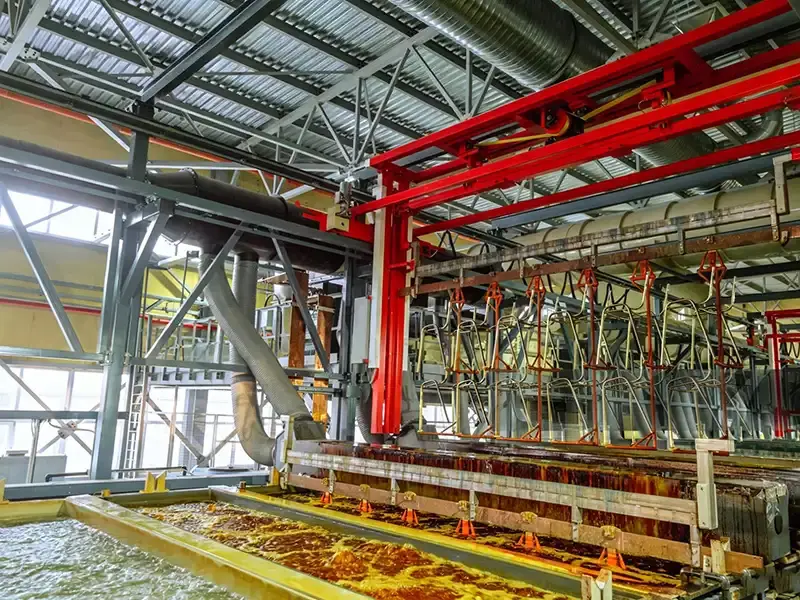
Electroplating Industry
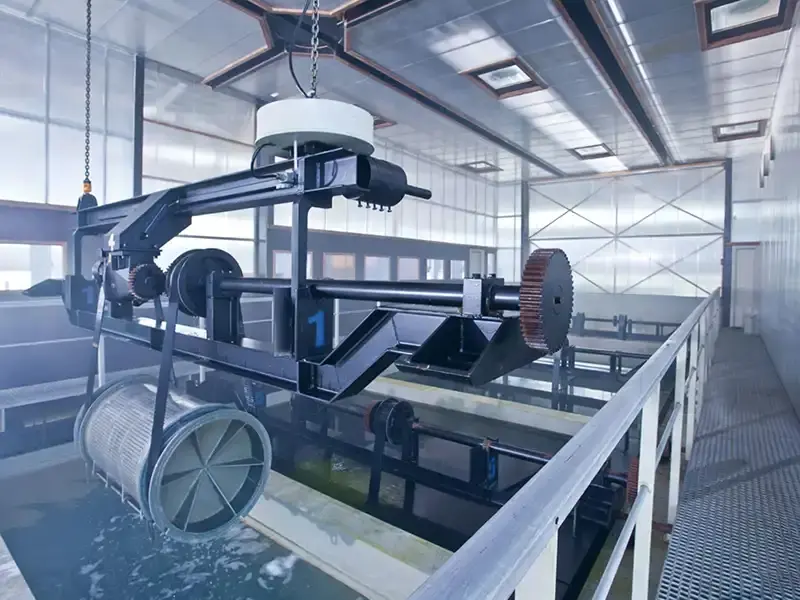
Chlor-Alkali Industry
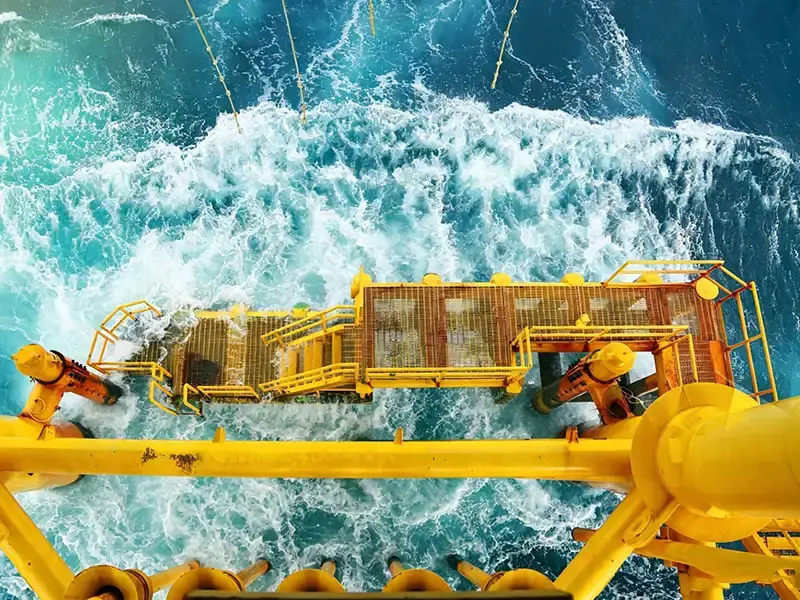
Marine Engineering
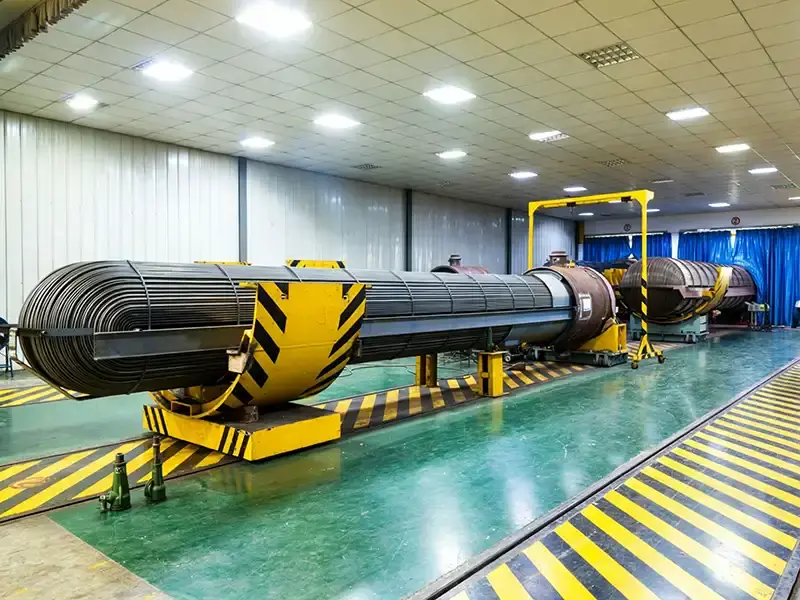
Hydrogen Energy Industry
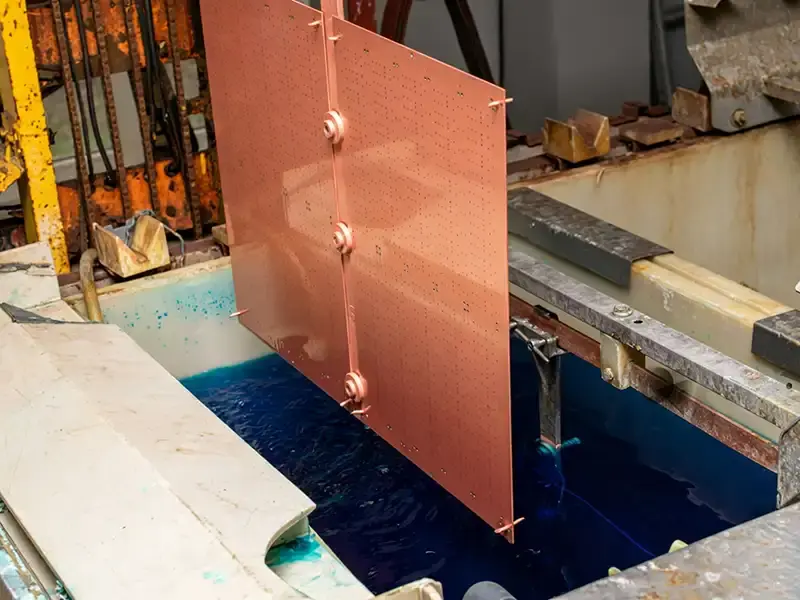
Mining and Metal Recovery
How to Purchase the Suitable Titanium Anode
To select the correct titanium anode system, first identify your seawater application type, such as cooling circulation, intake pipeline, or offshore platform use. Then evaluate seawater conditions including salinity, temperature, and fouling level.
Next, define system scale and required current output. Larger systems require higher output or distributed anode layouts. Installation environment is also important for determining structure type such as mesh, tube, or plate.
Coating selection should match expected operating intensity. For continuous seawater exposure, Ru-Ir MMO coating is recommended for stable chlorine generation.
Finally, consult technical support from HY Ti-Ni Import & Export to ensure correct design matching, OEM customization, and long-term operational stability.
FAQ
Q1: How does this anode prevent marine growth?
It generates chlorine-based oxidants in seawater to prevent biofouling.
Q2: What is the typical lifespan?
Normally 10–25 years depending on operating conditions.
Q3: Can it be customized?
Yes, size, coating, and structure can be fully customized.
Q4: Is it suitable for offshore platforms?
Yes, it is widely used in offshore seawater systems.
Q5: Does it require frequent maintenance?
No, it is designed for long-term low-maintenance operation.
Our Factory
Production site
State-of-the-art manufacturing for titanium anodes, precision coating and quality control.

Choseing titanium substrate
|

Substrate Cutting
|

Sandblasting
|

Pickling
|

Laser Cutting Configure Precious
Metal
|

Coating
|

Sintering
|

Packaging
|
Workshop
Precision machining and coating workshop for titanium anodes.

Titanium anode coating workshop
|

Thermal decomposition sintering furnace workshop
|

Titanium mesh anode production area
|

Pickling/surface treatment process
|

Pickling/surface treatment process
|

Quality inspection workshop
|

Worker operation photos
|

Panoramic view of a clean production line
|
Quality inspection
Rigorous testing for coating adhesion, electrochemical performance, and durability.

Dimension Inspection
|

Coating Thickness Testing
|

Coating Adhesion Testing
|

Microstructure Analysis
|

Conductivity Testing
|

Corrosion Resistance Testing
|

Bond Strength Testing
|

Final Inspection & Packaging
|
Packaging
Professional packaging to prevent damage and corrosion during transportation.
 |
 |
 |
 |
 |
 |
 |
 |
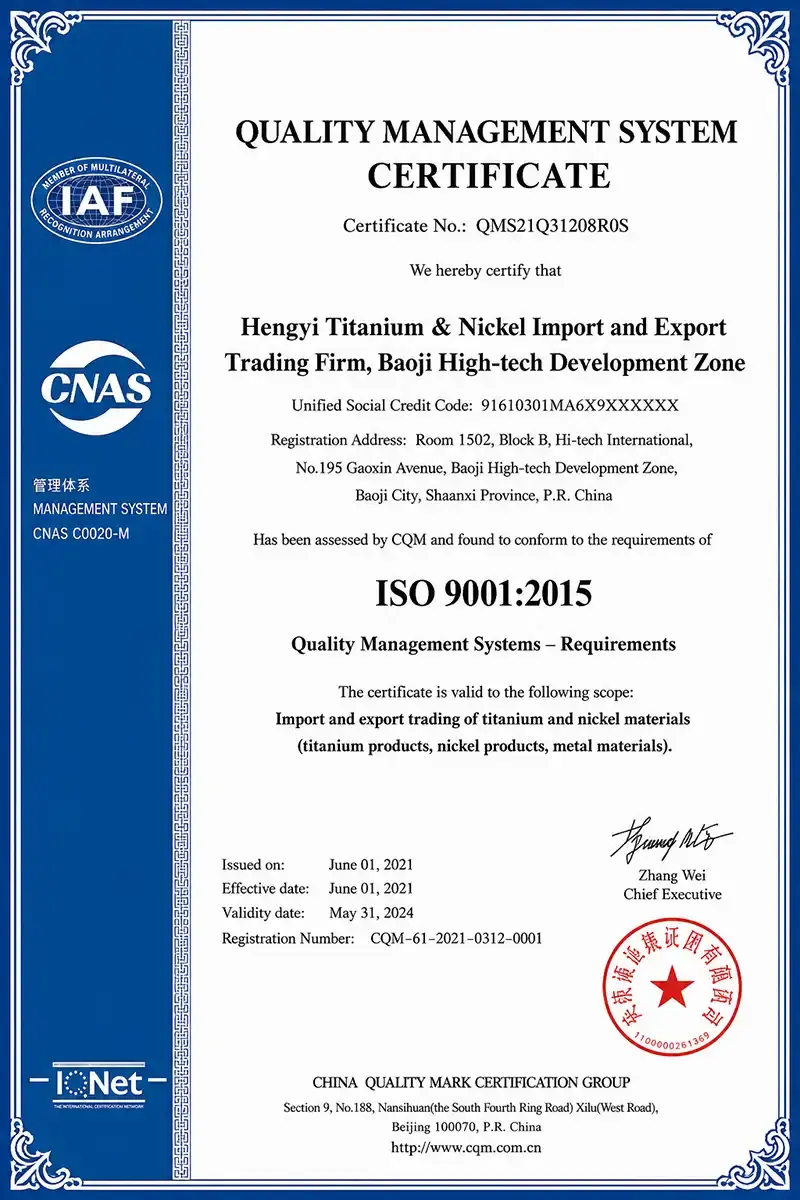
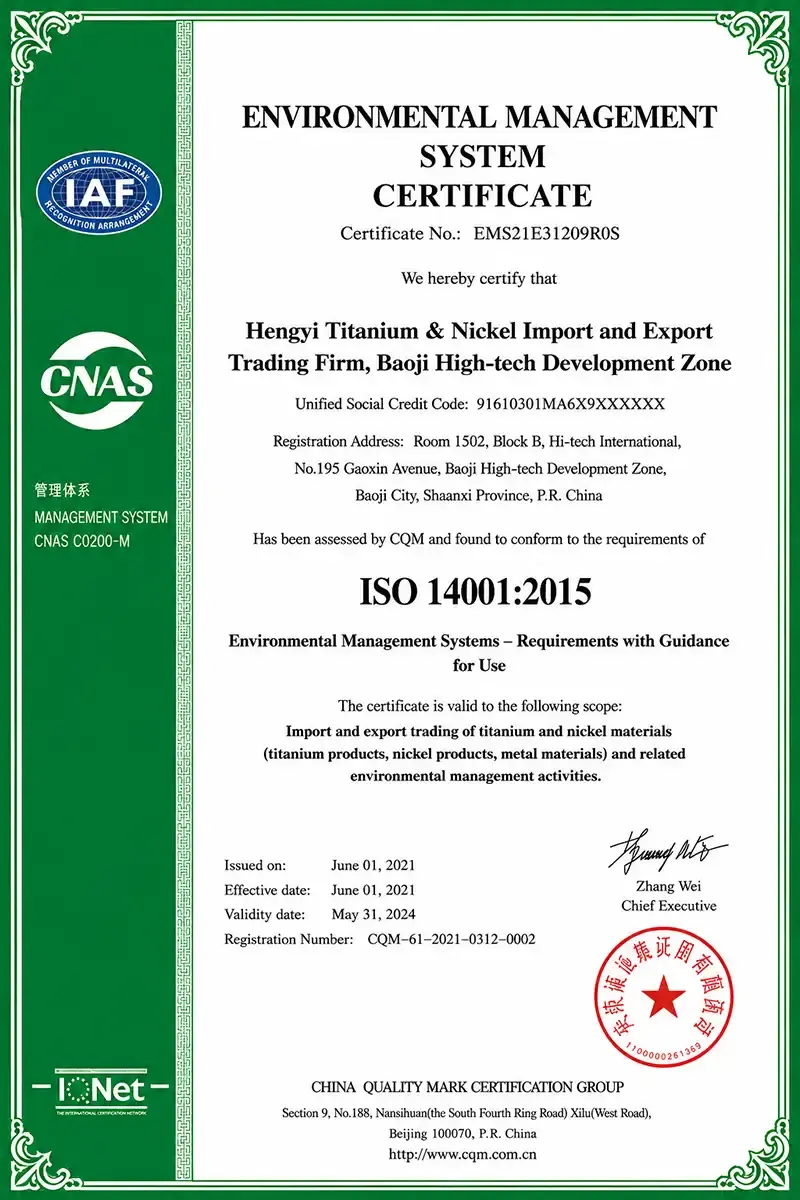
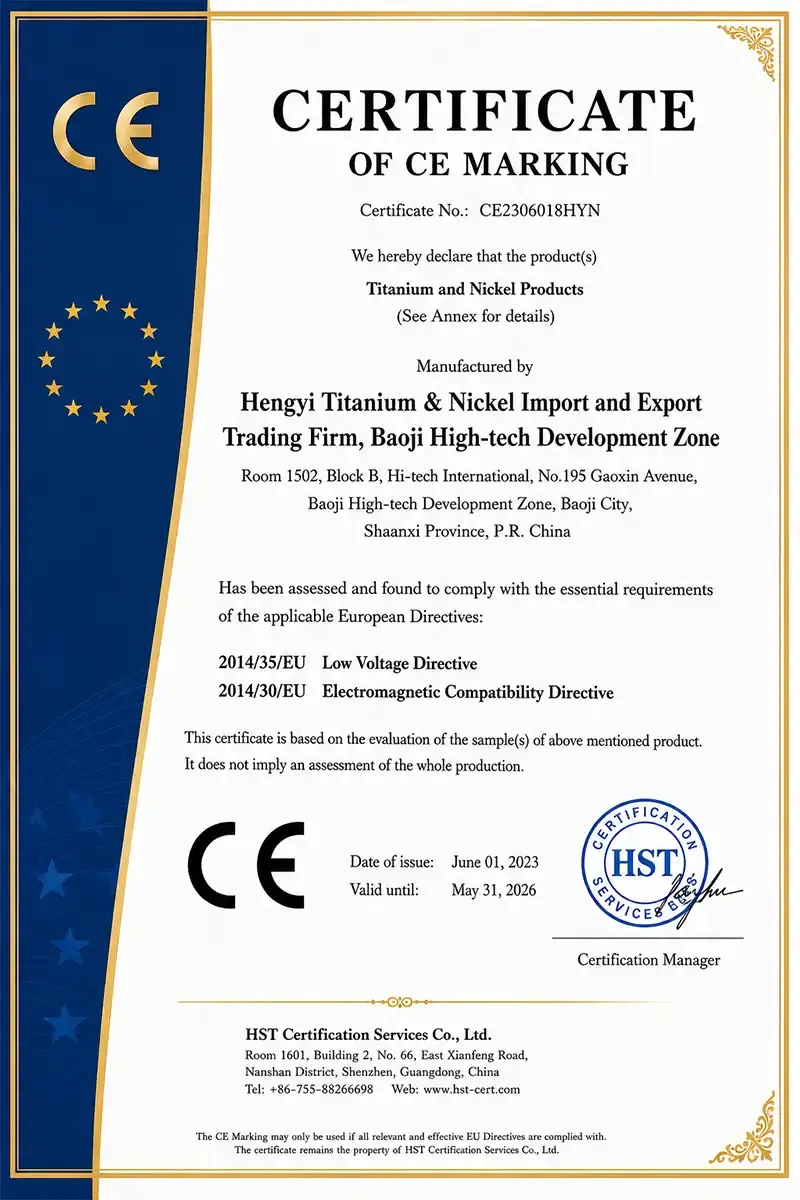
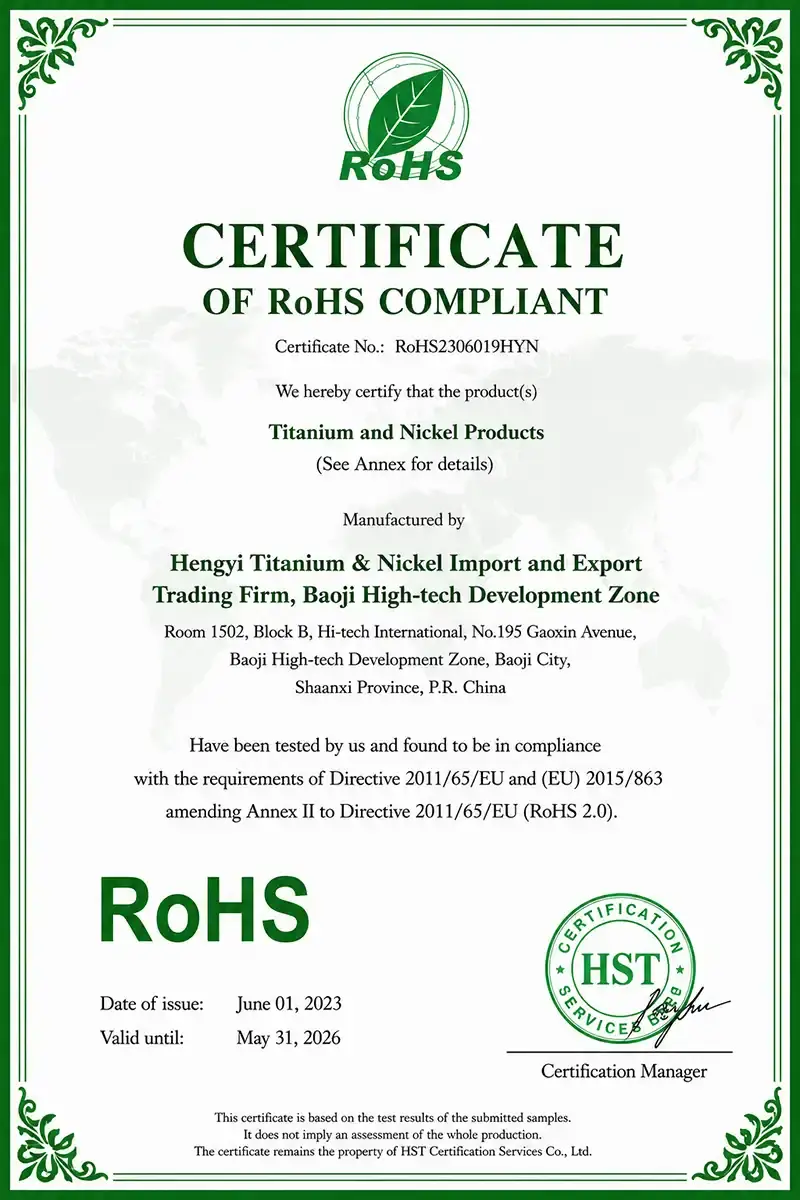
Certifications
International certifications ensuring quality and environmental compliance.
_1781246051466.jpg)
Learn about our latest products and discounts through SMS or email